
A small child with two candles of snot dangling from her nose tugs at Maggie’s cardigan. She takes her thumb out of her mouth.
“Miss Elton, why is your shoes different?” Maggie, grabbing a tissue from the box on her desk, looks down at her feet. She is wearing one black shoe and one brown one.
“I was just testing you all, to see if anyone noticed,” she says. Having wiped the child’s nose she sidles toward the cupboard and pulls out the trainers she wears for PE. They look ridiculous with her tights and tweed skirt, but slightly less ridiculous than odd shoes.
It is a relief when the afternoon arrives, and she has an excuse to change into what she refers to as her “slacks”. The children form an orderly line, and she leads them into the hall. They find spaces and sit down. She does not even have to remind them, today, that a space is somewhere she can walk around them without standing on anyone else. She has them well trained.
Maggie gets down on her hands and knees. This takes longer than it used to. The children giggle. Maggie emits a ferocious roar. So ferocious, in fact, that a couple of the children recoil in fear. Maggie hauls herself into a cross-legged position.
“Who can tell me what kind of animal I was pretending to be?” she asks. Hands are raised and faces turn red as breath is held and children compete to be asked. Maggie smiles as she tries to remember what question they are clamouring to answer. Lately this has been happening more and more. She chooses a girl with blonde plaits whose name eludes her.
“An elephant?” guesses the girl. Her classmates titter, and Maggie gives them a reproving stare.
“Not a bad guess, Eleanor,” she says. She remembers now, the girl’s name is Eleanor. Relief washes over her. Elephants are interesting creatures, she tells the children. It is said that they never forget. Maggie envies the elephants.
“Who wants to have another try?” she asks. She tells them she is thinking of an animal that is a member of the cat family. You can see them at the zoo. The male one has a sort of fringe of fur all round his face. Eager hands wave in the air again. Maggie points at a boy who has turned puce.
“Lion,” he says. She nods gratefully. Of course. Lion. She tells the class that they are going to practise being different animals. She turns on the music and off they go, growling and howling, screeching and tweeting. Some of them grow a little silly. She calms them with a single look. At least she has not yet lost the power to do that. She glances out of the window at the rainswept yard, and it occurs to her that she should have done playground duty this morning. Someone must have covered for her. Fear forms a fresh knot in her stomach.
In the classroom the children change back into their uniforms and Maggie distracts herself with the tying of ties and laces, the struggle to pull t-shirts over too-large heads, the battle to return two correctly named plimsolls to each PE bag. She re-plaits several heads of hair and carefully wraps a lost tooth in a tissue. She writes a note to the tooth fairy, hoping she will be generous.
As the children scramble to hang their bags on their pegs the Deputy Head appears at the classroom door. She surveys the chaos with pursed lips. Almost young enough to be Maggie’s granddaughter, the tasteful tattoo on her shoulder is visible through her white cotton blouse.
She summons Maggie with a jerk of her head. They need to have a chat, as soon as possible, she says.
“There are a couple of issues.” She turns and clip-clops away on her inappropriately high heels. The children gather on the carpet and Maggie selects a picture book to read to them. It takes a while for them all to be settled and Maggie fills the time dreading the meeting that lies ahead. She knows what the “issues” are. The forgotten playground duties, the day she arrived with two rollers still in her hair, the nonsensical lesson plans that seemed to have been written by someone else entirely, when she came to read them. Someone must have complained. She has let things slip. Her hands shake slightly as she sits up straight, setting an example. The class falls silent.
Maggie begins to read. It is one of her favourite stories, a tale she almost knows by heart. Today, though, the words jump about on the page and some of them have suddenly grown unfamiliar. She halts, stumbles and, mid-story, gives up and sets the book aside.
“Who has some news to share?” she asks the class, with a half-hearted attempt at cheerfulness.
She welcomes the home-time bell in a way that she never used to. She bundles her charges into their coats and matches them up with their book bags. Clinging weakly to the door frame she watches the last of them disappear through the school gates.
Maggie shuts her eyes for a moment. She remembers her mother, in the home, unable to remember the purpose of her own legs.
“I want to stand up, but I can’t remember how,” she had said, tears coursing down her cheeks. She had not recognised Maggie for the last five years of her life. Maggie is thankful, finally, for her childless state.
She opens her eyes and stands up straight, preparing herself to face the Head and Deputy. She imagines their glee as they confront her with her shortcomings, and the gossip that, as thick as thieves, they will have about her later, over a bottle of wine.
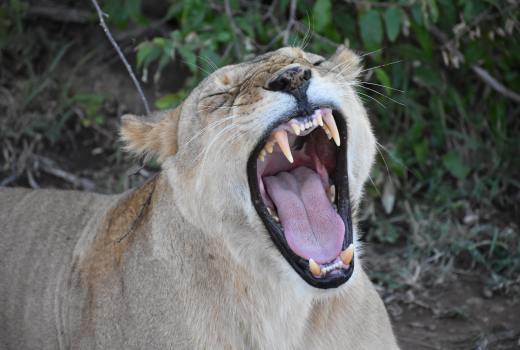
Right now, though, Maggie is defiant. She stretches her jaws as wide as they will go and roars like a lion into the silence.
*
Alison Wassell is a short-story and flash writer who has been published in various places, both in print and online, including Retreat West, Reflex Fiction, The Cabinet of Heed, NFFD, FlashFlood Journal, and Litro.
 Shooter Literary Magazine