Shooter Flash: “Sole Survivor” by Alexandra O’Sullivan

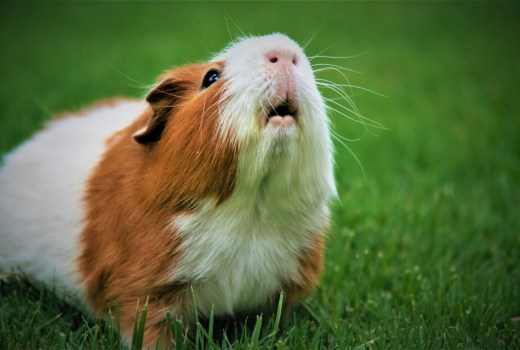
I parked the car after the school run and took the core of the apple I’d been eating to the guinea pigs on my way past. There, at end of the cage, lay a potato-shaped lump.  

“Oh no,” I said as I knelt to confirm what I already knew, that Nutmeg, the matriarch of our pig family, had died. 

“What?” grunted my fourteen-year-old son as he slumped past on his way to the house.

“Nutmeg has died.”

“Oh,” he said, his voice rising to betray his teenage apathy. 

He wavered a moment, glancing toward the cage, then turned and continued his slouch toward the house, blue school bag slung over his shoulder.

I buried her under the tea tree beside the graves of her two children, Storm and Gumnut. Her body was still warm as I cradled it into her final resting place. I had buried her children quickly, wanting to get the gruesome task over and done with, but with Nutmeg I lingered, crouching by the hole to stroke her silky, brown coat and say my silent goodbye.  

It wasn’t just that she was my favourite, though she was, unashamedly, my favourite. It was that her death signified more than the end of her life, it was the end our life as a family with guinea pigs. I knew that her husband, Flash, the sole survivor, would have to be rehomed, unless I could borrow a companion pig to help him to see out his days.

Guinea pigs are social creatures. They have been known to die from solitary confinement. In some places it is illegal to have only one. I’d long worried about what to do with the last remaining, but I never expected it to be Flash, the frail old patriarch with a slow stride and a cataract, who’d outlive his wife and children. 

My son was eight when we got Nutmeg and Flash. Nick was a good age to take on the responsibility of pet ownership. A good age to use pets to learn about the birds and the bees. I grappled with the questionable ethics of backyard breeding, before deciding to allow them to have at least a litter, and to use it as a learning experience.

Before the litter was even born, we’d developed a habit of sitting for long periods by the cage. It was meditative, watching them bustle about, up and down the ramp, through the plastic tunnel, in and out of the blue igloo. Via google we learnt that the hilarious growling whole-body vibrate Flash did when near Nutmeg is called rumble-strutting, and it indicates affection. We learnt that the eccentric sudden leap accompanied by a mid-air twist was called popcorning, and it indicates happiness. I felt a vicarious surge of joy every time they popcorned. 

When the first litter was born, Nutmeg came into her own as a mother, guiding her four babies down the ramp and chatting to them, constantly, with encouraging squeaks, while they bopped along behind her with a chorus of chirpy peeps. 

“Mummy, Mummy, Mummy, Mummy…” I joked to Nick as we watched them. 

It was easy to make up words for them. They were constantly chirruping, peeping and making a hysterical high-pitched scream, called ‘wheeking,’ whenever we walked into the backyard, that Nick and I translated as, “Feed us!! Feed us!!” 

Flash was also frequently rumble-strutting at Nutmeg, even after two litters and the ‘snip, snip’ operation. 

“Hey there, pretty lady,” I imagined him saying with a low drawl as he sidled up alongside her, vibrating.  

They were a dream couple. They raised two litters of healthy babies and got to keep one from each.  During the pandemic, they got an extension on their home. Nick, aged ten, spent hours building them mazes and miniature playground equipment from scrap wood, though Flash always preferred his blue igloo, humping it along on his back like a turtle in a way that made us laugh. 

Years later, as I was feeding them their hand-picked grass, a job that had long been my sole responsibility, Flash humped his igloo along to reach the stalks, and I pointed it out to Nick, aged fourteen, as he headed towards the car.

“Flash is being a turtle.”

“Huh,” he grunted, barely achieving a syllable. 

“Nothing.”

When the second daughter died, I told Nick we’d lost another pig as I made dinner. He’d just returned from his girlfriend’s house, and I expected a monosyllabic reply, but he made actual eye contact with me as he gasped, “Not Nutmeg?” 

“No,” I said, resisting the urge to hug him. “Not Nutmeg.”

When Nutmeg did die, I arranged for Flash to move in with my friend’s pig, who was coincidently also recently bereaved, having lost her sister to a dog attack. It seemed like fate. I sent Nick, who was at his girlfriend’s house, a video captioned Flash meeting Luna.  

I imagined him watching the clip of Flash rumble-strutting up to his new woman. My phone beeped. I read his reply. 

Nice. 

*

Alexandra O’Sullivan lives in Regional Victoria, Australia. She writes fiction, creative non-fiction, articles and reviews. Her work has appeared in publications such as Westerly, Meanjin and The Big Issue Fiction Edition. She works as a high school English teacher and was recently included in the anthology Teacher, teacher published by Affirm Press. Her current work-in-progress is an anthology of interconnected school stories. Instagram: @alexandraosullivan84

Shooter Flash: “Winter Camp” by Gary Finnegan

The middle distance absorbed her gaze. Her sleeves, her nerves, frayed. Moths had chewed holes in the coats of the children; the children had eaten nothing for days. Days had been given to a journey, to the mantra, ‘Things will be better when we get to the camp.’ 

Now, her five-lined brow, like sheet music without a note, knew hope was a hollow lie. To be hungry and afraid and uncertain and on the move was the second-worst state of being. Hungry, afraid, uncertain and stationary was worse by miles. 

‘Did you wash those hands,’ she said, clawing at the paws of the youngest, fussing at a tap. ‘Got to wash those hands every time here, okay? Every time. Or you’ll get sick, like her.’

She nodded towards the next tarp, the day-old home of a family nursing a preschooler through the vomiting bug that was pinballing its way through the camp. 

Her own youngest straw-haired child stood passive and slack as her mother worked the gaps between the child’s fingers with a cement-coloured flannel. 

‘Did you change that vest,’ the mother asked. ‘Gotta change damp vests or you’ll get sick.’

She was curt, she knew that, but child management was the only available task and had to be done with vigour. It was, she reminded herself, in the children’s interests that their mother maintained standards. If you slid into apathy, you accepted death’s call.

The child was silent, and had been since they arrived. The three of them – the father having stayed behind – filed down the line until they reached an unribboned tent. There they tied the piece of cloth collected at the gate around a pole ‒ their claim on nine square metres of shelter, open on one side to the brown dust and ceaseless flow of human anguish. 

‘When is food coming, Mom?’

The older child, listless now, spoke for her sibling, spoke for everyone in the camp. The mother changed tack, opting not to lie, not to say, ‘Soon, love, just wait another while.’ 

Instead: ‘I don’t know.’

Would it have been better to stay and spend their hope under a familiar roof? As she wondered, an unwelcome competitive instinct surged within her at the sight of more new arrivals. ‘They need to shut the camp,’ she exhaled in a whisper. ‘Place is full.’

How many could be fed here? How many could make it across the border when it reopened? Who would decide who stayed, who went, who ate, and how much? 

She could do nothing. And it killed her to seek help while wishing it were denied to others.

‘Come here to me,’ she barked at the eldest child. ‘Those socks need changing.’ 

*

Gary Finnegan’s fiction has appeared in Litro, The London Magazine, The Phare, Roi Fainéant and Flash Fiction Magazine. He is the winner of the Frazzled Lit Short Story Award 2025 and received an Agility Award from the Arts Council of Ireland in August 2025. He has an MA in creative writing from Maynooth University and is working on a novel. 

Shooter Flash: “The Escapologist” by Sherry Morris

Dad didn’t wow crowds by bursting out of burning caskets like other escapologists. He didn’t wriggle free from straightjackets or emerge jubilant from chained trunks. Mom claimed he was a helluva Houdini anyway.

She meant his knack for disappearing whenever there were chores to do. Gutters stayed cluttered, grass grew high, the kitchen tap dripped constant as a ticking clock. Dad dodged other duties too: kissing boo-boos, reading bedtime stories. He vanished at the first sign of raging tears, monster-fears, or any kind of hug. Sometimes, Mom wondered aloud how we three girls had even been born. Then she’d smile and shake her head. 

‘Your father is a true magician. They never show their tell.’ 

Other times, when she thought we weren’t about she’d shout, ‘Marriage is more than smoke and mirrors, you know.’  

Dad would calm her with a kiss. ‘Shh, don’t break the spell.’

We loved our escapologist dad. Even when he evaporated from birthday parties, family reunions and long stretches of Christmas day. We kids would sit outside his locked study door. We’d chant all the magic words we knew – Abracadabra, Hocus Pocus, Bibbity-Bobbity-Boo – then wonder why our words took so long to work. Agreed the budding feeling in our guts was simply anticipation. And when he eventually reappeared, looking crumpled and spent, enveloped in a strange scent, we’d rush to him, ask him where he’d been. He’d sneeze. Look over our heads. Take in air like he had a long answer prepared. Then smile and shrug. In a rushed exhale he’d say, ‘Magic is complicated work.’

We got used to his non-appearances at our school plays, music recitals and high-school basketball games, but never that odd feeling in our guts. We accepted we’d never pin him down for photos and tried to engage him in other ways: asked for homework help, advice on boys, tips and tricks to pass our driving tests. We said, ‘Tell us about your day.’ In the middle of telling him about ours, we’d suddenly find ourselves alone – the image of his lopsided grin shimmering in mid-air.

We did our best to interest him in our lives and when Dad took early retirement, Mom said for sure we’d see more of him. Instead, he announced he was moving out. He’d found the love of his life – Janice – and planned to live with her, her cat Bunny, and Barnaby, her ten-year-old son. We looked to Mom to see if it was true – she looked like a lady cut in half. 

Things didn’t quite go to Dad’s plan. He developed a severe allergic reaction to Bunny. And Barnaby didn’t like sharing his mom full-time with Dad so he moved into a bachelor pad, temporarily, while everyone adjusted. Then Parkinson’s got hold of Dad. He couldn’t escape that.

Mom took him back to convalesce. She said she did it for us kids though we were nearly adults by then. She repeated what the doctors said – the disease made him behave the way he did. We couldn’t blame Dad, she said. We all nodded our heads. No one wanted to believe Dad was an escapologist at heart. 

We looked on the bright side: We still had time with Dad. But with the tremors and balance loss, he wasn’t up for much. We tried to reminisce, but our best memories didn’t include him. He shrugged when we asked what he remembered about us. We joked Dad was so skilled, he’d find a way to dodge death.

He didn’t, of course. And Mom shocked us all with a curse-laden outburst, shouting maybe Dad was finally f-ing happy now that he was free of us. We supposed this tirade was Mom’s grief speaking. Enclosed her in a group hug. Told her he’d loved us in his own way. Reminded her of his charm, his magic touch. We said all the things he’d said himself a million times. But from our mouths the words sounded hollow. Clichéd. 

Somehow, the words worked on Mom. She pulled out a smile from somewhere and ta-dahed it to her face. Said it was our duty to keep Dad’s memory alive. We went through his stuff (there wasn’t much) and found a cheap cutlery set he’d bought while living on his own. Mom announced we’d use it for our Sunday roasts, his favourite meal he sometimes ate with us. 

At first when we gathered around the table each week, it was nearly normal. We talked, laughed, reminisced. Dad’s empty chair was reinstated so it was almost like he was back. It wasn’t exactly the same though. Our voices were too loud, too rushed, ventriloquist-dummy high-pitched. We shovelled in mounds of food blink-quick as if we had both hungry hearts and empty bellies to fill.

Then one Sunday, instead of his face, all I saw was his shoddy fork and dull knife in my hands. The white plastic handles had already started to discolour. And yet, these bargain-basement utensils were more real to me than Dad. 

I listened to the clink, clatter and chatter that tied us to him. Wondered why we still worked so hard to maintain the illusion. Why we never allowed ourselves to be mad at our always-absent dad. And why we weren’t enough for him. 

I pressed the fork tines deep into the meat, securing it to my plate. Too bad we couldn’t use cutlery on Dad. I positioned the knife to slice but stopped. My appetite had disappeared. My eyes pricked as the world blurred. I wished we hadn’t shushed Mom’s rage. Or called the childhood anger resting in our guts ‘anticipation’. I took a deep breath. 

‘Dad was a complete shit,’ I exhaled. ‘I won’t be his complicit assistant.’

Into the speechless silence, I said the words again – louder this time, then once more. Something lifted; a spell was broken. I released my grip. Watched the cutlery fall to the floor. Opened the windows. Slid open doors. Walked outside to the sunshine-filled yard.

*

Originally from Missouri, USA, Sherry Morris (@Uksherka & @uksherka.bsky.social) writes fiction from a farm in the Scottish Highlands where she pets cows, watches clouds and dabbles in photography. She presents a monthly online spoken-word radio show featuring short stories and flash fiction on Highland Hospital Radio. Many of her stories stem from her Peace Corps experience in 1990s Ukraine. “The Escapologist” was originally published with The Sunlight Press. www.uksherka.com

Shooter Flash: “Almost to the Point” by Jon Fain

After an early dinner on their last night in Provincetown, Rob and his daughter Mandy walked to the beach. Light reflected off the water, dappling the waves, and glimmered past a slow-moving boat, also lit up. There were mingled smells: grilled food, the sea, Mandy’s perfume.

The flash of Mandy’s phone reflected off her windbreaker. She’d barely spoken to Rob since he’d told her to stop taking empty water bottles out of the wastebasket. She would line them up on the dresser in their room, as if this was going to magically recycle them.

Besides her added height, she’d gotten moodier in the six months since he’d seen her last. She could switch on the sulk, a steady drip-drench. He didn’t need to share a wet blanket threaded through with I-Don’t-Want-To-Be-Here.

“If you’ve got something else you want to do, go ahead,” he said.

A staircase led from the beach to the parking lot behind the inn where they were staying, next to the sushi place where he’d watched her pick at her food. She could go join the kids from the night before, or maybe meet a new group on Commercial Street.

After she started to jog away, Rob called, “Not too late!”

She kept running on long bare legs, dark shorts, darker jacket, into the twilight. Fourteen was young, although sometimes not so. Forty-four was too, though also not really. 

The first time Mandy said she wanted to go explore on her own, he’d come out to this same spot, watched white sailboats anchored in the bottle-clear shallows. Then he’d walked along the water, the bay ruffling blue eastward. Ahead of him, a large dock, part of a complex of multiple buildings, stretched over the sand. It was a well-known cruising spot. The night before, after Mandy had fallen asleep, he’d considered it. Instead, he just remembered what it had been like under there. 

There was no reason to go there during the day unless you were a seagull or something looking for scraps. He’d taken out his phone and called his office to check on their progress with the new patient-focused software.

When she was eight, Mandy told Rob she liked that he was a dentist, because “people are scared of you.” At twelve, as Rob and Mandy’s mother Andi were splitting up, Mandy said that she’d read how a lot of dentists committed suicide, and she made him promise he wouldn’t do that after he moved out. Rob gave her some additional facts: her grandfather and great-grandfather, also dentists, had not done so. She said okay, maybe Grandpa, but since she’d never met her great-grandfather, how did she know he wasn’t lying? Like you lied to my mother, Rob thought she would say next.

Rob started walking the way his daughter had gone. He kept letting her go off on her own. They were supposed to be spending time together. 

When he came to the top of the staircase and into the parking lot, he was surprised to see her there. They met at the trunk of his car, as if they’d planned it.

“What happened?”

Mandy shrugged. She didn’t seem upset, just bored, or distracted. 

They went back to their room. Mandy had the bed and Rob the fold-out couch. He wasn’t being cheap, getting one room; he thought it would give them more time together. Luckily, there was a communal bathroom on their floor that was vacant most of the time while she was installed in their private one.

“Dad, did Mom tell you?”

“What?”

“Remember when you said I’d learn about life and death when I had a pet?”

He’d told her a lot of things. How could he not be a good parent? His patients were all kids. He asked them what flavor polish they wanted, bubble gum or mint? He played Santa with his gift bags of toothbrush, mini-toothpaste, and floss.

“Did you know Lila… We went to the vet and they put her to sleep?”

Andi had told him Mandy preferred to be called Amanda now, but whenever he forgot, she didn’t react. He hadn’t heard about the dog.

“I think she got sad when you left.” 

That was two years ago, he almost said.

 “Dad, is there something you want to tell me?” she asked after ten minutes passed, after he’d picked up his book.

“About what?”

“Why did we come here?”

“To spend time togeth—”

“Is there something you want to show me?”

“Besides that I love you very much?”

One reason that people came to Provincetown was surf-casting on Race Point. Rob thought it might be interesting to watch, if not actually to fish. But the weather had been cold for early October, and then it had rained. Mandy didn’t like that they would have to drive on the beach to get there. Cars and trucks on the sand were damaging to the environment. You might not encounter the dolphins your plastic bottles were endangering but you would hear the sand crabs cracking under the all-wheel-drive.

Rob turned on the TV. The screen showed the guide for all stations, and he scrolled through it. 

“Mom said you and your friend Ben met here, and maybe you wanted to show me the places you went.”

Andi would probably never forgive him. But would she ever stop trying to define for their daughter who he was? 

“Ben’s gone,” Rob said. 

“Does that mean you’re coming home?”

Speaking of suicide, he almost said.

He flicked through channels. Mandy went back to her phone. Outside, the tide was easing in. By dawn, the water would have risen under the large dock down the beach. Then, as the tugging of the new day drew it back, birds would hop along the wet-packed sand, beaks busy at the bubbles of buried things.

*

Jon Fain is a writer and editor living in Massachusetts. Some of his recent publications include short stories in A Thin Slice of Anxiety and The Argyle Literary Magazine, flash fictions in The Broadkill Review and Midsummer Dream House, micro fictions in Blink-Ink and ScribesMICRO, and a chapbook of flash fiction, Pass the Panpharmacon!, from Greying Ghost Press. Twitter/X: @jonsfain

Shooter Flash: “Sabbath” by Rebecca Klassen

Mum called it Suicide Sunday and had done so since she was a girl.      

‘A day so boring you wanted to kill yourself,’ she told me. I wondered if other parents said similar things to their teenagers. 

Throughout her childhood, she’d adhered to the Sabbath traditions of duty and no play, though this was more under her parents’ guidance than God’s. Post church, she would sit on the stairs in her best clothes and listen to the heathen neighbour children through the wall, blowing recorders and laughing. She’d been round there once for tea. The mother had given them sugar sandwiches and let them gouge holes in the lawn with sticks. 

‘Mind my bloody azaleas,’ the mother had told them. Mum had repeated ‘bloody’ to her mother and had never been allowed back.

When my grandfather died, Mum was a freshly divorced, single parent. With grandfather gone, Nana expected Mum to attend Suicide Sundays again with me in tow. The new criteria no longer required Mum at church, though we were told it would be nice if we came along once in a while. Only knitting, reading, and watching Songs of Praise were permitted in Nana’s chintzy sanctum. Watching other programmes risked a brazen ‘hell’ or ‘bugger’ slipping into the atmosphere to sully the day.   

One late autumn Suicide Sunday, I pivoted round and round on my backside in front of Nana’s gas fire, hoping that, like a rotisserie chicken, I would eventually cook on all sides. Nana worked her knitting needles. Mum stretched so that her feet almost touched the fire’s orange bars, the heat making her tights give off a plastic smell. I watched Mum nodding off, imagining having to grow up here every day. A new family lived next door with the sounds of computer game music, squabbling, and giggling coming through the walls.   

As the gas fire reddened my cheeks, I suddenly stopped pivoting as I remembered the crumpled piece of paper in my schoolbag. 

‘Mum?’

‘Hmm?’ 

‘I’ve got cookery class at school tomorrow. I’ve got to take ingredients in.’

Mum’s eyes flicked open. Nana’s needles stopped.

‘What have you got to make?’ 

‘Apple crumble. Sorry, I forgot.’

Both women were on their feet.

‘What’ve you got at home?’ Nana asked Mum.

‘No apples, that’s for sure.’ 

Nana went to the kitchen, Mum close behind. Cupboards banged over notes of infuriation.

They returned, Mum carrying a bag. 

‘Nana’s only got Braeburn apples. We’ll have to see if we’ve got the other ingredients at home.’

‘Can we go to the shop for the rest?’ I asked.

Nana shook her head.

‘You should’ve told me yesterday,’ Mum said to me. I’d always wanted to leave Nana’s before Songs of Praise, but not like this. Mum apologised to Nana.

Nana shrugged. ‘Sometimes life throws us trials.’

The drive home was quiet. Intermittently, I apologised. Mum said she knew I was sorry, yet there was no talk of forgiveness. 

‘It’s always up to me to sort these things, never your father,’ she said. After that, I stopped apologising. 

I couldn’t picture where my father was or who he might be with, and I didn’t know when I would see him again. Even though her father was dead, Mum had the same dilemmas, but the similarities didn’t unite us. 

When we got home, Mum put the butter, wrapped in its golden foil, on the kitchen table.   

‘We need oats too,’ I said tentatively, ‘because it’s a healthy crumble.’ 

‘Bring me the recipe.’

I brought her the forgotten list, which she read while I brought Nana’s bag of Braeburns to the table. Mum weighed and decanted ingredients into plastic tubs. Little white clouds billowed; granules were spilt. She banged the cinnamon jar on the counter. The clumps wouldn’t burst, so she threw it in the bin. I put the tubs into the bag with the apples. The butter remained unweighed on the table. Mum put away the scales and muttered as something tumbled from the cupboard. 

‘Where shall I put the butter?’ I asked. Mum rounded on me as more clutter fell from the cupboard. 

‘Up my arse!’ she yelled. 

‘Okay, but you’ll have to come to school tomorrow.’

My words floated precariously into the air. They’d been a gamble, particularly on a day we didn’t laugh. Mum said nothing as she put her face in her hands. The silence built over the hum of the fridge. I wanted to cram the words back into my mouth and fill my cheeks with the trouble they’d caused. Then her shoulders shook as her legs folded. Her hands dropped. She was laughing, shaking all over.

*

Rebecca Klassen is co-editor of The Phare. Her work has featured in more than forty publications including Mslexia Best Short Fiction, Popshot, Ellipsis Zine, Burningword, Barren, and The Wild Word. She has won the London Independent Story Prize, and was shortlisted for the Oxford Flash Prize and the Laurie Lee Prize. She regularly performs her work at Cheltenham Literature Festival and Stroud Book Festival.

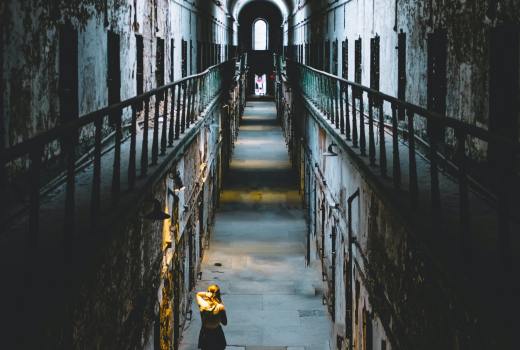
Shooter Flash: “Virginia Correctional, 2024” by Crystal Fraser

They said it was murder, even though I swear it was just an accident. I ran during my first two pregnancies right up til the third trimester, and even though I’d hit 34 by the time of my third, I saw no reason to do things any different. I went down over that tree root and started cramping right away. When I got home and saw the blood I called 911, didn’t think twice about it. And then the cops showed up at the hospital. 

“Intentionally causing the death of an individual,” they said, “by self-induced abortion.” How can a fetus be an individual when it’s physically linked to its momma, connected by the cord. There’s no individuality there – it’s a part of someone else. A potential person, sure. But not yet a person, housed inside the womb. Just one step further along than sperm and egg. Maybe they should criminalise men for all the potential life they waste watching internet porn. But that would never happen, would it. Every man would be in jail.

The thing is, I was always a Republican. I love my country, and my kids, and even though Burt up and left pretty quick last year, right after I got that positive test, I’ve got good family values. But what people say don’t always match up to what they do. All those politicians acting righteous, telling other people how they oughta live, talking about God and family and the right to life – then they get busted for rape or assault or sex with a minor. Even if they don’t get busted, everybody knows it. Trump never went down but there’s plenty of pictures out there of him partying with that Epstein guy, and I bet he wasn’t hanging out just to play golf. 

So now I’m in here, because of what they called “negligence”, causing the death of someone I never even met or named, while my girls are living without their momma and their daddy God knows where. What kind of family values is that, to take away the momma of two girls just because a child that might have been didn’t even make it to its first breath. They’re doing okay, but my mom is pushing 60 and the girls run a little wild. My dad passed two years ago right after they overturned Roe. He was all for it, then, but I bet he didn’t count on things going this far.

You have to wonder why some people care so much about the existence of babies in this world and not the lives of women. Or maybe you don’t, not that hard. Seems to me like men have all the freedom of choice, but they sure don’t want women to have it the same way. If pregnancy was something that happened in the male body you can be sure they’d do what the hell they liked about it. Especially if they already had two kids to take care of on a single income, and didn’t much feel like going through the sickness and the labor pain and the blocked ducts and the crying and the broken sleep and the cost of childcare making it damn well impossible just to survive.

So really, when you think about it, you could say the outcome was worth it, even if I did end up in here. Even if it was an accident.

Which it was.

I swear.

*

Crystal Fraser’s stories and essays have been published in Alaska Quarterly Review, MacGuffin, The Iconoclast, Potato Soup Journal, Flash Fiction Magazine, and elsewhere. She teaches high school history in Indianapolis, where she lives with her husband and two kids.