Shooter Flash: “Extramarital” by Dana Harris

They were sitting around the patio table beneath the fawning summer trees: Phil, his wife Manda, and her lover Dom Traynor, who had come over for dinner while his wife was away. Manda had prepared a sumptuous meal, as ever, and kept the conversation bubbling, topping up the lulls like champagne flutes. She was always in her element when entertaining. 

Phil was well aware of the true nature of his wife’s “friendship” with Dom. As long as it didn’t disrupt their marriage, however, he saw no reason to confront her about it. He worked hard, they had three kids, he liked his life. Why ignite a bomb fuse? He knew full well he’d neglected Manda emotionally over the years, so he was fine with turning a blind eye now. She always maintained the utmost decorum, outwardly.

Having served the coffees, Manda settled back into her wicker armchair with a satisfied smile. While all three admired the garden view, Dom extracted a cigar from his blazer and cut the end. Fireflies danced in the night air; moonlight glinted off the oily surface of the swimming pool. Dom leaned across the table to offer Phil a cigar.

“No, thanks,” he said, waving it away. “I don’t smoke.”

“Go on, darling,” Manda said. “You could have one this once.”

“I don’t smoke,” Phil said, bemused. Manda’s lips tightened. Dom leaned back and lit his cigar. Smoke curled away and melted into the darkness.

“Can you help me with the plates,” Manda muttered to Phil. As she had already gathered up the china and silverware from her side of the table, Phil picked up his plate and followed her into the kitchen.

“Why couldn’t you just take the cigar? Just to be sociable,” she hissed, rounding on him.

“Manda, I don’t smoke,” he said again, incredulous. “I don’t want one.”

“It’s not about that. It’s about being sociable.”

Feeling the heat rise in his chest, Phil turned and went back outside to the patio, Manda hot on his heels. Dom was flicking a thick end of cigar ash into the shrubbery, his feet up on a neighbouring chair.

“Go and find an ashtray,” Manda instructed Phil, who wandered back into the house and returned with a heavy crystal bowl from the library. The scent from the cigar was thick as woodsmoke. Phil cleared his throat as he settled back into his seat and wondered how long he should wait before excusing himself to watch the evening news. Even Manda couldn’t help but give in to a restrained cough.

Behind Dom, a grey plume of smoke thickened from within the ornamental hedge, becoming fully apparent only when a crackle of flame leapt out of the darkness, quickly licking at the drooping foliage of the surrounding trees. Manda shrieked as Dom lurched from his chair, knocking it over, while Phil snatched up his phone to dial emergency services.

The fire truck arrived in minutes, blaring its horn down the sweeping semicircular driveway and screeching to a halt beside the tower of burning pines. The trees beside the house now formed a single flaming torch, wrathfully licking the clapboard siding while Manda wailed and clutched her face. 

“I’m so sorry,” Dom muttered repeatedly, looking stricken, while Phil stood by grimly and watched the firemen swarming between their truck and the inferno, yelling and training their hoses upon the blaze.

“Well,” Phil said, turning to his wife. Ash, floating around them like snowflakes, had settled on her coiffed hair and turned it grey. “This is sociable.”

*

Dana Harris has published short fiction on Quick Brown Fox and recently completed the University of Toronto’s Creative Writing Certificate. Alongside her day job as a paralegal, she is currently working on a post-apocalyptic romance novel. She lives in Toronto.

Shooter Flash: “A Good Son” by Sarah Macallister

Peter couldn’t come home for Christmas because his wife dragged him to her family. Susan always played the victim, but she was no wilting flower; she was a parasitic weed.

My son used to be an easy child. No tantrums. Other mothers had to tear themselves away from their children at the school gates, from guttural sobs that made your ears bleed. I pitied those mothers, who’d failed where I’d succeeded. 

I remember the first parent-teacher meeting. Mrs Forsyth sat across from us, wearing a frown and short hair. She reported that our son had stamped on another boy’s head. Peter never behaved that way at home. I knew it must be a mistake. At other parent meetings, we heard that he pulled hair, hit, stole food, and peed on a girl’s coat. Mrs Forsyth clearly didn’t like him, so I moved him to another school. After that, there were no bad reports. 

I started as keys jangled in the lock. Harold whistled and threw open the front door. 

“Something smells good! Baked a cake?” He squeezed around the table and pulled me into his stout stomach. Fruity hops blossomed from his mouth.

“Been at Dopey Does?”

“Don’t you mean The Staggering Stags?”

We snickered together, as if this was the first time we’d made this joke. After I knotted my pinny, I glugged oil into the frying pan and ignited blue flames. Bubbles frisked in the oil and I slid raw meat to sizzle. I laid the table with chutney and a vase of dried honesty. We tucked in. Harold drank another pint and the amber beer glowed while he tipped back his head.

“Heard from Peter today?”

“No, he’s too busy. Working late, poor boy.”

Cake for pudding. Harold poured custard over his bowl. Steam spiralled while he rummaged for a spoon, clanking the cutlery, and shaking the table as he shuddered the drawer shut. I ate mine with a dessert fork.

Not long after Harold climbed into bed, he was foghorn snoring. The harder I tried to ignore it, the more frustrated I grew, until tears streamed into my pillow. Rain lashed the roof and windows, the wet whipping of a cat o’ nine tails. The doorbell rang. 

I swiped my cheeks and flurried downstairs in my nightie. I clicked the hall lamp. My neck shivered as I reached for the handle. It was so late. Who could it be? An outline blurred in the pebbled glass. A man’s height.

“Mum?”

Only Peter. I fumbled to unlatch and clasp the handle, ready with my welcome smile. My thoughts drifted to the kitchen. I opened the door and threw a glow into the seething chattering darkness, which swallowed it whole.

Rain-dark hair plastered his scalp and he looked white, sick. As I fell back to let him enter, my smile fixed, he planted himself on the threshold and leaked on the flagstone floor.

“Peter, are you alright?”

He shook his head and shuddered within the sodden coat. His eyes wouldn’t meet mine.

“You’re cold,” I said, desperate to shut the night out, but Peter only stood by the door and twitched.

“Come in, love.” He shuffled forward and I sealed us safely inside. I trundled off to the kitchen and flicked the kettle to boil, tipping bags into red cups. I wondered whether to give Peter some cake.

“I made a mistake.” Peter spoke slowly, each syllable dropping like the rain. He hovered under the kitchen doorframe, coat on and dripping wet. I could not make the kettle boil any faster. I didn’t know what to do with my hands, so I turned and smiled.

“What?” I asked, but I didn’t want to hear. “Wait, let’s get you dried off first.” I wanted to scurry for towels and clothes, but Peter was blocking the doorway as he answered my question.

“I made a mistake.” His voice broke and a croaking, throaty gurgle slithered into my kitchen, raw like uncooked meat.

“Oh, everyone makes mistakes, darling. Now let’s get you warmed up with a nice cup of—”

He looked me right in the eye.

“A mistake,” he spat back at me. “Susan’s gone.”

Something unfamiliar crawled across Peter’s face. A sneer. He was sneering at me. 

Boiled water steamed from the kettle, its innards raging with bubbles, until the dainty click snapped it off. I turned my back on Peter and poured the tea. 

“Would you like your bag left in?” 

He didn’t reply, so I took a teaspoon and squeezed the bag against the side of the cup before fishing it out. I was meant to say something. My pathetic mother, he was thinking, who can’t face reality, whose eyes are cross-stitched shut. I didn’t know what to say. 

I held the scalding cup against my palm, so the handle faced Peter. He could either take it, or watch my face strain to remain calm as hot china burned my skin. He took it like a good son.

*

Sarah Macallister has a Natural Sciences PhD and is now embarking on a second PhD in History of Art. Besides academic publications, she has had short stories published by Impspired, Flora Fiction and Literally Stories.

Shooter Flash: “Under the Rubble” by Lisa Geary

A chink lets in a shaft of dusty light. Irene, wedged inside, shifts her legs and shuffles her torso to turn around. Straining, she leans towards the gap to peer out: the land lies quiet. No-one on their way.

She settles back to wait, resting upon the hard ground. What if no-one comes? How long could she last? She feels achy already, and hungry. She listens for the thud of falling masonry, the crash of concrete in the distance. Right now only a thin thread of birdsong weaves its way through the cracks, into her dim crevice.

Earlier she’d been in school; a normal day. Her mother had picked her up, red-faced, a little late. Irene had whined to join her friends in the playground, but her mother hung onto her and marched her straight home. The grown-ups were always busy. Not wanting to go straight into the house, Irene had run away when they got home, out into the woods.

Now, Irene is bored of her game. She slithers out from beneath the pile of branches and brushes dirt from her pinafore. A few of the long sticks have become dislodged; she hauls them back into place, fortifying the entrance to her hideaway. She runs along the winding path, across the garden behind the house, and in through the back door. Her mother is making supper with the news on the telly.

Irene flops onto the sofa. “How long til supper?” she whines. Her mother is grappling with a steaming pot, hefting it towards the sink.

“Five minutes,” she says, taking in Irene and the television in one quick glance. “Let’s turn that off now. I can’t take any more.”

Irene rolls from the sofa and reaches to switch off the television, another evening of collapsed buildings and grey rubble upon the screen. Men babble in another language, hauling chalky debris. Other men pull a small body from the wreckage. The child in their arms, still alive, swivels a dark eye towards the camera. Irene meets her gaze. Behind the child, the edge of an arm juts from the jagged pile of broken concrete.

Within the mound, a chink lets in a shaft of dusty light.

* 

Lisa Geary has had fiction published in Wishbone, Sepia Journal, Spellbinder, Haunted Words, and elsewhere. She lives near Durham, where she is a member of the Durham Writers Group. Currently, she is juggling writing with the world of two new kittens and kitchen renovation.

Shooter Flash: “The Last Day of the Rest of Your Life” by Johanna Bernhuber

It’s the first day of middle school and you’re still in bed. I laid out your clothes for you last night, warm from the dryer and freshly folded. Now, I pour your juice, flip your pancakes, and call your name for the third time. You already sleep like a teenager, though you’re one year and two months short.

Summer has been long. Your hands are more used to a fishing rod than a pen. Every day you trail grass and dirt into the house from your sneakers; your bare feet spatter chlorine trails across the kitchen floor. School seems like an impossibility after two months of total freedom.

You slouch to the counter and eat, monosyllabic. My upbeat chatter bounces off you like a cartoon forcefield. You carry your breakfast things to the sink and I give you a hug, which is momentarily accepted. I’m proud of you, I say, feeling the bird bones of your shoulder blades beneath the thick sweatshirt. You’ll do great. 

I hustle you out the door and grab my own keys, handbag, scarf. You hoist your new bulletproof backpack over one shoulder. We play your music in the car as you gaze out the window: wide front lawns, trees dripping crimson leaves. The right turn to your old school, where we turn left. You can probably ride this journey on your bike but not yet. For now you’re safe in my car.

I pull up at the kerb and can’t resist smoothing your hair, though you shrug me off. A big kid now. Have a good first day sweetheart, I say. You get out and swing your backpack over both shoulders. 

When you shut the car door, you stoop and give me a small wave. I can tell from the look on your face that you’re being brave, masking the nerves. A new school, new kids, new teachers. Part of you wants to get back in the car and drive back to summer, even as you lope toward the stone steps. I put on a big smile and wave back, thumbs up. I keep looking, and waving, just in case you look back again, one last time. 

You climb the steps alongside the other kids and all of you wait, one by one, to pass through the metal detectors, into the unknown.

*

Johanna Bernhuber is a psychologist who has written for the Chicago Sun-Times, and has published short fiction and nonfiction in Whitefish Review and Denver Quarterly. She has three children and lives in Illinois with her husband, one dog, and too many books.

Shooter Flash: “In the Wake Of” by Elizabeth Vidas

She caught Stan coming out of the bathroom, one hand down his pants as he fumbled with his shirttails.

“Stan, come with me,” she said. “I have something to show you in the hydrangeas.”

Not the most seductive line, but Stan was her second-to-last target, she was tired, and he would certainly follow her into the bushes or under the kitchen sink if she asked. Sure enough, in five minutes she had undone his carefully tucked dress shirt, and he was grasping at her breasts with puffy palms.

Stan was the twelfth man Louisa had kissed that night. Most had been easy marks, though the professors were suspiciously self-assured: they grabbed her waist or hiked up her leg as if used to younger, suppler limbs. Only one – a grad student – had seemed ill at ease. He’d stammered, acting calm, but there was sweat on his mustache. She’d reconciled herself to a quick peck.

She crossed the lawn to the bar, a fold-out table draped in white cloth. Pouring a martini, she glanced around. Her garden looked well, of course. The Cambridge wives chatted vigorously next to the hydrangeas, determined to play at normality. Their husbands stood beside them, subdued. The pockets of guests had thinned out – Louisa smiled into her drink, thinking that soon she would be in a Manhattan studio. She would call Hannah from social-work school, and they would meet at Café Figaro. Maybe she would even look up some Sacred Heart girls; she assumed they were still on the Upper East Side. Scrutinizing their perms and reminiscing about Sister Margaret’s mole might be a laugh. 

She eyed her final target. David was standing by what she called the baby fountain, a cherub holding a bird bath. She stepped from stone to stone on the garden path until she reached him. He looked down as she approached, giving his Dark and Stormy a swirl. They watched the amber tornado settle in his glass.

“This is one of your better parties,” he said.

“Well. It’s not every day one’s husband retires from teaching and married life.”

He sighed. “Louisa.”

It was petty, but she wouldn’t admit it, so she looked towards the garden instead. The last of the guests were leaving: some gave fake, cheery waves while others walked determinedly towards their cars. 

“I kissed all your friends.”

“You did what?

“I kissed all of them. Paul and Jared were a little gropey – I think they’re used to a student set. And Aaron was mechanical. He’s been handsome for so long, he must rely on muscle memory now. Stan was greedy—”

“You kissed Stan?”

“That’s what shocks you?”

“Louisa, what are you doing?”

“I’m kissing all the men. Because after twenty years, I don’t owe anything to anyone. I didn’t join the wives’ book clubs or go to your colleagues’ asinine lectures—”

“So I’m responsible for that? Twenty years ago you were so prophetic you thought you’d save yourself the trouble?” 

“I didn’t save myself from anything.”

The porch light went on, and Louisa glanced over automatically. Inside was the sofa bed where he’d been sleeping. Each morning he was gone by the time she woke up; seeing his reading glasses on the wicker table always gave her a stomach cramp. Just two round lenses, but somehow they conjured the arc of his lips, the hair between his eyebrows he refused to pluck.

“I’m going to kiss you, David.”

He said nothing, looked at the porch lights. It amazed Louisa that he was leaving her for an older woman – an unattractive one, no less. She’d seen her at the university, gray bob and blue blazer. Louisa put a hand between his shoulders and turned his face towards hers. His mouth was motionless, his eyes unfocused; she suspected he was parleying with Elaine in his mind. She kissed him, and they were back at the café in the Village, where she’d leaned across the checkered tablecloth as he’d described Plato’s chair. Where he’d confessed how he’d been scared of the man-sized monkeys in Wizard of Oz. He was squinting through his glasses at the opera; he was folding them into his pocket before grabbing her by the vest, kissing her in front of the Washington Square Arch, and she knew she would follow him to the end of the earth, into any hydrangea bush, or onto the porch bed, as she did now.

*

Elizabeth Vidas is a writer and teacher living in Montpellier, France. Her short story “Smoldering” will appear in the upcoming issue of Western Humanities Review.

Shooter Flash: “Twenty Blinks” by Sarah Sibley

You feel the rain patter your cheeks and watch the grey clouds sagging above. The stubbled ground jabs into your back. 

*

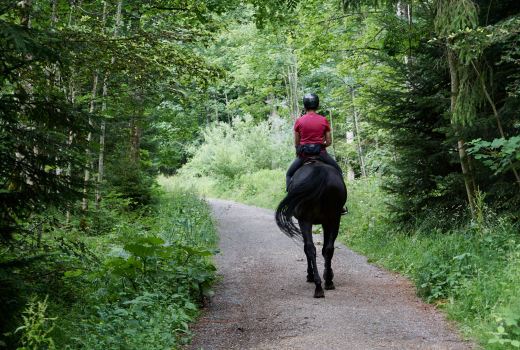
There is a tearing, crunching sound nearby. You can’t turn your head but realise it’s your horse, cropping the grassy verge. You try to croak her name but nothing comes out.

*

Bella at university. Charlie in Manchester. But Hannah, at school. You’re supposed to pick her up after hockey.

*

You feel surges of agony and anger, simultaneously. But nothing from the waist down.

A soundtrack of blame is running through your mind, complete with the memory of your husband’s disapproval that you continued to ride after your children were born. You made a point of hanging on to one thing that was your own.

*

The rain has eased and the clouds are thinning out. The grey sky behind them is whitening. Watching the clouds becomes compelling.

*

The lane is silent, apart from Rosie grazing.

*

You wonder what your ex will think, even though he’s eight years out of the picture.

*

Your sister will have to fetch Hannah. Though the rain has stopped, your cheeks remain wet.

*

You as a girl, about ten, running down the tree-lined street where your parents lived, being chased by a barking dog.

*

There is an unfinished canvas in your studio, the ocean painted in loose strokes. You’d been working on the children playing in the sand. It’s shaping up to be one of your best pieces.

*

Hannah has inherited your artistic skills, but she needs to apply herself.

*

You heard the van barrelling up from behind. You stayed still in the saddle and waved an arm downward to signal he should slow. He didn’t.

*

Rosie has always been good in traffic but no horse can be expected to behave if a van side-swipes them at 40 miles an hour.

*

She’s moving, at least.  You can hear her, still cropping, a little farther away now.

*

Now and again you used to wonder if the risk was worth it. Worth the joy, the sense of freedom. The deep contentment. The beauty of the land. You don’t remember coming to a conclusion.

*

Watching the clouds from this angle is peaceful. You regret that you never made time just to lie down and look up.

*

Love sears your heart. Bella stumbling in the middle of her ballet recital, going on to win a standing ovation. The fear, rushing Charlie to hospital when he got stung by a bee.

*

Hannah’s delighted sweaty face, lofting the hockey trophy with her teammates last year.

*

In the distance, you hear a car coming down the lane, but the world has swivelled; the clouds, now, appear to float beneath you. You turn your gaze from the whiteout and look up to see higher.

***

Sarah Sibley is a writer and baker who lives in Durham with her family. As a cake artist, she has written extensively on baking for various newspapers and magazines. This is her first published piece of fiction.

Shooter Flash: “Drifting Apart” by Gordon Pinckheard

You can’t get very far away from each other on a 33-foot sailboat. Graham was sitting in the cockpit, Linda on the foredeck. There were about twenty-five feet between them. They both wanted more.

There was a bump against the hull.

*

Out in the middle of the Atlantic, there was not much to think about. Only one person to talk with, to relate to, to be irritated by. Graham knew the right way to do things on a boat; he had taken courses, Linda had not. He carefully explained what she was doing wrong, but she ignored him. Her knots came undone, the sails flapped; they were not making the progress that he expected.

With only the two of them on board, watches were tough. Neither of them got much sleep. Alone in the cockpit at night, sliding between dreams and dark night, Graham had fantasies. Fantasies of freedom. The company of another woman, a younger woman, a better woman. Sometimes, a naked woman.

Linda was seasick. Pills did prevent vomiting, but she complained of stomach cramps and headaches. She refused to cook, unable to keep her balance down in the swaying interior.

“I’ll be glad when this is over,” she said.

“Over? Don’t say that. After this crossing, there’s the coast of Europe to explore! Wandering port to port. It’ll be great!”

“No,” Linda spat. “We’re using my money, and I say no. Once we’re across, we stop, settle down. Stop moving.” Her face was pale, taut.

Graham clamped his mouth shut. After a pause, he said, “OK, if that’s how you want it.” Looking away from her, he scanned the empty horizon, the ridges of endless waves. Freedom, he thought. 

That night he couldn’t entice any naked women out of the darkness. “My money” occupied his thoughts. He had shackled himself to such a wife! They had only spent a fraction of her wealth. What was to happen to his big adventure? An adventure he had dreamt of since childhood. Freedom was sliding out of reach. Linda wanted to trap him in a “normal” house. Was he man or mouse? No way! Feeling reassured, he smiled as he dozed, conjuring satisfying fantasies. Fantasies of unfettered freedom, spending money. Without Linda.

*

There was a bump against the hull. Graham looked astern, expecting to see something floating away in their wake. There was a partially submerged buoy, but it was following them, attached by a short length of rope. The rudder must have caught a drifting buoy. He turned off the autopilot and moved the wheel, hoping the rope would slide off the blade. The wheel was stiff and hard to turn; the rope must have jammed between the top of the rudder and the hull.

They dropped the sails and, using a boathook, Graham tried to pull the buoy and its tether loose from the boat. Failing, swearing, he lowered the inflatable dinghy from the foredeck. Maybe the rope could be freed working at sea level. He really didn’t want to have to swim beneath the boat. The oars were stored away down below; he’d manage without them. He was about to get into the dinghy, still swearing, when Linda said, “I’ll do it.”

“No, I’ll do it,” he said. “I do everything else; I’ll do this too.”

“Piss off! You don’t do everything. I’m fed up with you making a martyr of yourself. There’s no one else here to impress. I’ll be glad to get off this damn boat, even if it’s only for ten minutes.”

“OK, let’s see you do it then.” He sat down in the cockpit and watched her clamber over the lifelines, down the steps on the transom into the grey inflatable.

She caught the buoy’s rope and looked up at Graham. “You’ll have to move the dinghy forward,” she said. “I have to pull the rope forward, not back.”

He untied its painter from the stern and dragged the dinghy forward along the hull. He tied the line around a stanchion.

In the dinghy, Linda pulled at the buoy’s rope. It came loose, and she dropped it in the water. The partially submerged buoy and its rope drifted away from the boat.

“See? I got that done. I don’t need to hear any more of your crap. Now move me back to the stern.”

Graham looked down at her.

“Not hear more of my crap? Fair enough. Goodbye, Linda.” He bent down to the knotted painter.

Briefly, she sat frozen. Then she rushed to the front of the dinghy, balanced precariously on the inflated tube, and reached up to grab him. Her left hand caught his jacket while her right struck at his head. Ignoring the blows, he remained leaning forward, working at the knotted painter. With all her weight, she pulled him down towards her, pummelling his head. He toppled into the well of the dinghy, landing awkwardly. She fell onto his back, striking at him with both fists. He rolled over, protecting his head with his forearms while they struggled.

“For God’s sake, quit it!” The fear and desperation in his voice stopped her. The painter was caught around his arm – the loose painter.

They looked towards their sailboat, across clear water; wind was blowing the boat and dinghy apart faster than either of them could swim.

Silently, Graham moved to the stern, leaving Linda alone at the bow. The endless sea surrounded them, the horizon broken only by a single receding sailboat. There were about three feet between them. There would never be more.

*      *      *

Gordon Pinckheard lives in County Kerry, Ireland. Retired from a working life spent writing computer programs and technical documents, and encouraged by Thursday Night Writers (Tralee), he now writes anything he likes to entertain himself and – hopefully – others. His stories have been published by Daily Science Fiction, Gemini, Page & Spine, Allegory, Every Day Fiction, Flash Fiction Magazine, and others.

Shooter Flash: “King of the Castle” by Ben Shepherd

Rain like ash began to fall in the glade. Richard ducked beneath the oak and curled into the arch of the split trunk. The rain fell harder, greying the view. He would wait. There wasn’t much to do but wait, anyway; the money was gone, all gone. What a way for a king to go.

Richard sagged against the rough bark, letting the ridges gouge, and stared across the lawn at the streaming stone of his home, his ruined castle. All he had lost – all he had worked for, taken from him. Governments! Bloody taxmen, baying for handouts. He hadn’t come from much, but he’d battled and built an empire. His mother had called him king, even as a child. A king deserved to keep what was his.

A door opened amid the stone flank of the house and a blond head, speckled with silver, appeared. Richard crabbed behind the trunk. The wet world was quiet, but thoughts still bellowed round his head, like a hound chasing its tail. He closed his eyes.

“Richard,” a voice snapped from across the clearing.

He opened his eyes to see the familiar iron figure, slim but rigid, like a crowbar. Her arms were folded, her back braced against the rain: Theresa.

“Hello Terry,” he said, aiming for lightness. His voice sounded strange, even to him. He couldn’t go out in public any more, among people interacting normally. He no longer knew how they did it.

“I’ve been looking for you,” she said wearily. “Dinner’s ready.”

“Oh?” Richard paused. “What is it?”

“It’s cold, at this point. That’s what it is.”

“I think maybe I’ll just stay here.” Meek, supplicating. He hated himself.

“Come on. Enough of this.” Theresa advanced across the glade.

“No! No!” Richard shrieked, hysteria spiralling. He shrank into the tree. “It’s raining! The water will come through the roof! We can’t fix it, Terry! You know we can’t!”

“Come on,” said Theresa, grasping his arm. The thin cotton of his sleeve, soaked transparent, clung to the bulbous knots of his veins.

Richard snatched back his arm. “It’s terrible, Terry,” he moaned, looking at her with limpid eyes, a washed-out blue. Theresa sighed.

“What is?”

Richard gazed at her in silence, shaking his head. The few wisps of his hair had come unstuck and waved softly, wilting to the wrong side of his temple.

“Don’t worry,” she said, “about the water. If it comes through again we can fix it.”

“We can’t,” Richard insisted. “We can’t afford it.”

“Richard, we can.” Theresa took his arm again. “Don’t be so ridiculous.”

“But you don’t understand!” he wailed. “You don’t know!”

“I know you did something very silly,” she said grimly, turning to march him back. He resisted for a moment, weeping, then allowed himself to be steered between the trees.

The kitchen was warm. Richard slid into his chair, compliant, while Theresa opened the oven. A cloud of mushroom and onions puffed out.

They ate quietly, rain pattering. Theresa felt the familiar wrench of yearning for the children, now grown, twined with relief that they weren’t around to endure what was happening at home. 

“You know,” Richard said in a reasonable tone, “if you would just let me explain – if you could understand the problems…”

He jumped as Theresa’s hand slammed the table.

“That’s enough,” she said. “There are no problems. Just ordinary things that everybody has to deal with.”

“Everybody doesn’t deal with this,” he snarled. “The roof is leaking! We’ve got rot in the timbers in the barn, the heater for the pool doesn’t work, the shutters don’t close in Samantha’s room…”

“It’s just maintenance.”

“… the dryer doesn’t dry properly!” Richard shrilled.

“It doesn’t matter, can’t you see?”

“But how are we going to pay for it? We don’t have the money!”

“We do have the money, Richard, for God’s sake!”

Richard cast back his head and started keening, an unnatural sound – like an elephant, thought Theresa wildly, or an old woman. A crazy, selfish old madwoman. Just like his mother.

“Stop it,” she hissed. “Shut up.”

The rage fizzed up like a shaken soda bottle and, through her fist, burst out upon Richard’s face. The faraway despair in his eyes flamed to bewilderment, then shock.

“You hit me!” he shrieked, scrambling out of his chair. “You hit me!”

Theresa tasted a brief surge of satisfaction, like a savory drop of blood. Swiftly, anger and sorrow soured the rush. He had driven her to this; what else could she do? Doctors were no help. He had brought this upon himself, and upon her. His selfishness would destroy their whole family.

She stood up and stepped away. Richard was quailing in horror, tentatively touching his face.

“I’m sorry,” she said. Stepping towards him, she felt a stab of guilt as he flinched. “Let me see it.” A patch of red bloomed across the furrows of his cheek. 

“Richard,” she said, laying a hand on the crook of his arm, “it’s all so unnecessary.” His eyes flared, but he didn’t move, like a cornered animal.

“You wanted this house,” he spat. “You insisted on it. I didn’t want it. You wanted it, and now we have all these problems.”

“The only problems we have, Richard, are the result of you fiddling your taxes!”

“Fiddling taxes,” he scoffed. “That’s not…”

“You think the rules don’t apply to you,” Theresa stormed. “This is what comes from being raised in a crazy family. Who calls a child a king?” she sneered.

Richard stared, defiant.

“The problems in this house,” he started.

“There are no problems!” Theresa screamed. “You are the problem! It’s all in your mind!”

Theresa, his iron queen, broke down. Sobbing, she fled the room. Her tears triggered his own and, once more, Richard began to cry. Sooty streaks found the crevices in his crumpled face and filled them like runoff from a blackened river. One by one the stones of the castle in his mind came tumbling down around him.

*

Ben Shepherd has published short stories in Crimewave, Fictive Dream, London Magazine, and Magma. He was runner-up for Writing Magazine’s Grand Flash Prize, and is currently assembling his first short story collection. He lives in Leeds.

Shooter Flash: “Third Date” by Crystal Fraser

By the time the moths appeared, it was too late. Somewhere, buried in the folds of scratchy wool and inherited cashmere, immune to desiccated lavender and scent-faded cedar balls, eggs had already been laid. Larvae, microscopic, fed on the fabric, ate through it and, come spring, took flight in winged form. The small brown moths were the worst: a sure sign of holes to come.

Nina had already spied several of the pests that week. Now, she closed in on one marking her apartment wall, a tan smudge almost camouflaged upon the scarred, flaking paint. The moths never moved quickly; even if they did fly off, they fluttered weakly, like dust swirled by a subway gust. This one stayed put. Nina plucked it, rolled her fingers together and brushed off the remains. Particles of wing, paper-thin, drifted into the trash can beside her easel. It was too late to save one of her few pairs of silk underwear; with a little more larval lunching, Nina might pass it off as a crotchless panty. But she could, at the very least, take revenge.

She held up the undergarment towards the light filtering through the smut-greyed window, which was large but, as it overlooked the subway line and the Brooklyn-Queens Expressway, enabled more soot- than sun-trapping. Little holes sprayed the fabric as if it had been caught in a miniature drive-by. Given the amount of attention men had paid to her lingerie in recent years, it didn’t much matter; Nina may as well go commando. She felt mournful all the same, balling up the underwear and tossing it the way of its muncher. It was a relic of years past, a time when someone might have admired her in it but, despite the leaner body of youth, she hadn’t had the courage to flaunt it. Just to buy lingerie on rare occasions, to please herself. And now that she had dug it out to consider wearing it, it was no longer an option.

*

Crystal Fraser’s stories and essays have been published in Alaska Quarterly Review, MacGuffin, The Iconoclast, Potato Soup Journal, Flash Fiction Magazine, and elsewhere. She teaches high school history in Indianapolis, where she lives with her husband and two kids.

Shooter Flash: “The Oak” by Jennie Stevenson

“And this is you,” says Eva, showing me into my new home.

It’s pleasant enough – The Oaks is very upmarket – but we both know what it really is: death’s waiting room. My things, already delivered, are the pitiful sum of an entire life: trinkets, books, photo albums I haven’t opened in years. At least my wardrobe is a rainbow of velvets and silks.

A vase of spring flowers stands on the table, from Eva, and my eyes prick with tears. How long has it been – if ever – since someone gave me flowers?

There’s a soft thwock from outside: my flat, on the first floor, overlooks the tennis court. A man in tennis gear is exiting the court, an elderly woman on each arm, laughing. His hair is white, but his shoulders are broad, his arms still muscular and tanned. 

“Found the quarterback,” I murmur. The kind of guy who would never notice me.

Eva laughs. “That’s Tom. He’s quite popular with the ladies.” I bet.

My new doctor arrives. I notice Eva stealing glances at him as he checks over my medical records, and I don’t blame her – if I were a few years younger, I might have flirted with him myself.

They leave and the room feels empty. I need some air.

*

When I reach the huge oak in the centre of the retirement village, I stop to rest my aching hips on the bench curving around its trunk. A voice startles me: the jock, a ribbon of sandpaper between his fingers.

“Hi. I’m Tom.”

He’s carving ornate patterns on the arm of the bench: leaves, flowers, birds.

“Oh! It’s beautiful. You’re a woodworker?”

He smiles. “Used to be. Still am when my hands let me. You?”

“I’m… I used to be a travel writer.”

He sighs. “I would have loved to travel. What was your favourite place?”

I laugh. “I can’t choose. It would be like choosing a favourite child.”

“Tell me about them.” So I do. I tell him about haggling for spices in the crowded passages of Istanbul’s Grand Bazaar, the drifting cherry blossom in Kyoto in spring, the dizzying cliffs of the Italian riviera. After a while he stops carving, closes his eyes and listens so intently I think he’s fallen asleep.

When I’ve finished, he asks, “Do you play chess?” When I say no, he laughs and says he’ll teach me. “Same time tomorrow?”

*

His chess set is exquisite. “I’ll make you one too,” he tells me. “My shelves are full, and if I offer to make anything for the ladies here they’ll only get the wrong idea.” Subtext: he can offer one to me, because he couldn’t possibly be interested.

“No grandchildren?” I ask, lightly.

He sighs. “No. I never – met the right person. I was engaged once, but for the wrong reasons, so I broke it off. You?”

“No. Same.” Our eyes meet – a fleeting understanding? Or am I kidding myself?

*

As the branches above us turn green, he teaches me to play chess, and then he carves a set for me. I bring my photo albums, the pages sticking together, and show him places I’ve been and known and loved, and sometimes he carves and sometimes he just closes his eyes and listens. 

Then he brings his photographs to show me: cribs that will become family heirlooms, a bookcase for an eccentric professor, a couple of fiddles he made just for the challenge of it.

One day, we find a couple locked in an embrace on what I’ve come to think of as our bench: Eva and the doctor. I wink at her as they disappear toward the doctors’ quarters.

*

Eva stops by our bench a few weeks later, smiling as she looks from one to the other of us. Above, the leaves are just starting to turn.

I ask about the doctor and she tells us that they’ve split. “I want to focus on work… and honestly? He’s kind of a dick.” 

Tom laughs heartily, but after she’s gone, his mood turns. “Sex before marriage, career before a relationship… It’s a different world to the one where we grew up. Makes me wonder how things could have been different…” He sighs. “In the next life, I guess.”

“Do you believe in reincarnation?”

He shrugs. “I don’t know. I just want to believe I could have a do-over. It’s only when you get to the end you realise what really matters.”

“What would you do differently?”

He shrugs again. “Travel?” He places his hand next to mine, and my blood fizzes. “Be braver.” He slips his hand over mine, and my heart judders in my chest. “And I hope… I hope I would have met you sooner.”

I turn toward him, and our eyes meet, and then he kisses me. And I’m aware of everything and nothing: the thousand sighing leaves above us, his hand cupping my face, the solid bench beneath us and the beating of my heart. He breaks off and smiles at me. “Same time tomorrow?”

*

I’m woken by hammering on my door. The world outside is cold and grey, shrouded in fog.

Eva. She’s holding something in her hands, but it’s her eyes I notice first: they’re swollen and red.

“I’m sorry. This should get easier, but it never does. And I wanted to be the one to tell you.”

His huge heart: a massive heart attack.

“I think he would have wanted you to have this.” 

She hands me the object: a carving of two figures on a bench, hand in hand, their foreheads touching, one with broad shoulders and still-muscular arms. I see the sharp crease in my trousers, the scarf in my pocket, my neat goatee: how clearly he saw me. How much love went into this. How much time we wasted. And across the bottom, the flowing inscription: To Jack, until the next life. All my love, Tom.

*  *  *

Jennie Stevenson is an English graduate currently working as a freelance content writer. Born and brought up in the north of England, she now lives in southern Sweden with her husband, where they are comfortably outnumbered by their children and pets.