Shooter Flash: “River Without Current” by Thomas McEvoy

In Mama’s last letter, she wrote that there’s no opportunity at the Napo River Lodge, where Papa works. She warned that if I continued to live with Papa, I would end up like Yolanda, chopping vegetables in the kitchen, or Maria, who cleans rooms every day. She even asked him what future our girl has at the lodge.

When Papa finished reading the letter, he crumpled it and threw it into the bin. I had to flatten it and read it alone. I wanted to talk to Papa, to ask him when I could go and join Mama, but I was afraid. I’d seen the look on his face as he read it, and I didn’t want to see that again.

The Napo River is all Papa knows. He wouldn’t leave because there’s nothing else for him.

That night, I used a flashlight and cocooned myself under the bedsheets, going over every word about Mama’s city, imagining the hotel she worked at and the school I’d go to. Papa had homeschooled me all my life, but I yearned to be part of what Mama described. I fell asleep thinking of the capital’s smooth, asphalted roads.

The next day, I told Papa we should go out searching for caimans, just the two of us, like we used to when I was younger. I figured that way I could talk to him, convince him to let me go and join Mama.

“We’ll go another time,” Papa said. He’d been out all day bird-watching with a group of Americans. Americans are the most demanding clients, but they tip the most, so Papa makes an extra effort with them. 

Then I lost the letter. I’d kept it under my mattress so nobody could find it. I’d read it every night, thinking that if I did, I would dream of the city. It was my way of bringing what I desired into existence. The letter was gone. I wondered if Maria had found it. I didn’t want to say anything in case she read it or told Papa. Instead, I tried to remember the letter, word by word.

One evening, Papa finished dinner with the Americans and looked for me.

“Come on,” he said. “We’re going caiman searching.”

I didn’t feel like going anymore.

“You wanted to, right?” Papa said. “Fetch your light.”

My flashlight was a prized possession. It was silver and looked out of place in the jungle. That’s why I liked it. It was a gift from a Dutch tourist, one of many who pass by for a couple of days, never to be seen again.

We set out in the canoe without a word. We knew the right spot. As we approached, we lifted our oars and shut off our flashlights. We floated on the river without a current, bathed in total darkness. At night, the Amazon comes to life. You hear the loud and constant buzz of cicadas, the croaks of frogs, and the howling of monkeys deep in the jungle.

Papa believes caimans are stoic. I didn’t know what that word meant until he explained. Caimans like to stay close to the shore, partly submerged in the river, motionless. Usually, the crest of their head, spine, and tail is visible. If you make a sudden movement or sound that scares them, they will lash or disappear quietly in an instant. The trick is to mirror them and relax. Papa showed me. If you do, they’re happy to lie still as you shine on them, their eyes blazing like marbles of fire.

“Papa—”

He turned on his flashlight. “There they are, look.”

Two caimans huddled together by the bank. The distance from their orange eyes to the tips of their long tails showed just how large they were. We illuminated their leather bodies, staring into their unblinking bright eyes. It was a game we used to play: shining on the caimans to see how long they’d stay.

We kept our lights steady, trying not to frighten them. After a couple of minutes, the bigger caiman went under without a sound, like a silent submarine. We focused on the remaining caiman, trying to extend the moment. The canoe ebbed side to side, mimicking Papa’s slow and deep breaths. Then the second caiman left.

“They’re gone,” I said, disappointed.

Papa closed his large hand around mine, placing a worn piece of paper in my palm. The weight told me what it was: Mama’s letter. It wasn’t Maria who had taken it from under my bed. It was him. He knew I’d been reading it.

“I wanted you to have it back,” Papa said quietly. His voice sounded like the creak of the canoe, something old and strained.

I berated myself, feeling as though my nightly rituals with the letter had sealed my fate. Holding it again, the city’s pull faded, replaced by guilt. 

“It’s time,” Papa said softly, as he picked up the oar. 

A man of few words, I knew this was how he let me go. I placed the flashlight in front of me, but I didn’t switch it on, not wanting him to see my face. I grabbed my oar to help us back. I opened my mouth to speak, but the jungle drowned me out.

*

Thomas McEvoy is a Paraguayan-born British writer who has lived in Panama, Honduras, Ecuador, Japan, Canada, Spain, and England. He is currently pursuing a master’s degree in Creative and Critical Writing at the University of Liverpool. His fiction has appeared in J Journal: New Writing for Justice, Scoundrel Time, and Collateral Journal.
Shooter Flash: “If, Man, Son” by Al Crow

And—which is more—you’ll be a Man, my son! – “If” by Rudyard Kipling

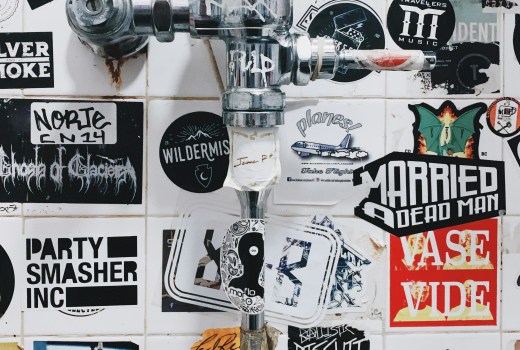
Pint up, contents down, and I’m up, down the corridor. Drink then piss. Same old drill for an old soul. No need to spell it out. Quite a walk actually, for an ageing gent like me who’s really, really got to go, but I get there fine. In time. Double take on the sign. Notice the rhyme. Didn’t notice the sign before though. A little horseman with an oversized sombrero and a machine gun on the door of the gents. Supposed to be funny. So little effort in the rest of what goes for a boozer in this Monopoly-board railway station and there this six inch gun-toting Mexican lad on the bogs. They must be making sure the really leathered blokes still get the right place. Well, I’m not that gone. Not by halves. I push. Pull the next one, and it gives me four urinals, a sink and a single cubical with the door shut. Quite the drinker’s vista. Two gentlemen already there. One in the crapper. Pair of jeans resting on lime green trainers. Some old rocker at the far wall-mounted john. Leathers, raggedy beard, and a steely stare towards the poster at his front, which is adverting erectile disfunction. 

A man like me. A place like this. All these ifs in my head. 

You can try and drink away the ifs, but they’ll get you in the pisser. That’s the actual pisser, I think. When the ifs come for you in the pisser. 

The raggedy rocker nods a hard-arse glare my direction. Spurs me into life. I take the second lane, so there’s one slot between this half-price Slash’s slash and me, while I’m not so bang up against the sink that this will turn into a problem. Not that anyone here is going to wash their hands, but thems the rules. Decorum, anyway. Me and the rocker, we’re both hoping no-one else comes in and has to tuck in between us, but we’re okay. For now. So, I hunt out my Johnson in these tight arse pants I got from Amazon about a month before the sixty seconds that I’m drinking so shit hard not to think about happened. 

I yank a boxer leg up first, which is too long to get myself under, so I try to unfathom the intricacies of a knob-tunnel system that’s more impenetrable than the Tora Bora caves. This might be taking a while, but I’m gazing forward. Always look forward in the gents. Golden rule, and the poster at my eye level blurs into focus. It’s goading me to Be The Best, and I realise I’m far from the best, so far from my best. Haven’t been the best in me for so long. Don’t need an ad to tell me that. I got sucked into something for my boy. He was infinite. Perpetual. So much life in those gleaming eyes that it didn’t seem possible that he could be anything but there – couldn’t be anything by twenty and sharp and charming, always catching a ball or a cute girl’s eye – and I didn’t encourage him. He found that path himself. 

Sure, he was playing up to his old man. Sure, there were footsteps. Boots to fill. An apple and a tree. Sure, he was imitating, emulating, coating himself in what he thought was the very best of me, only I never said he should go down that route. I never told him the person he should be. 

In the pisser, here I am, playing that card as if it’s a get out of jail free. 

Ha. There it is again. I’m a poet and I know it. A poet like all those messed up word-wankers that went before me with their drinks and their England. Take Kipling, my mirror. He wrote all that clap about being a man, then he bluffed his short-sighted son passed a medical and square into a cavalry charge, gifted the blundering vole the once in a lifetime opportunity to have a jog at a gun post. The national treasure never forgave himself. Funny that you learn that one at school. Funny, not funny. 

“This country grinds you down.” 

It’s the rocker speaking, breaking the rule of not talking to strangers in the gents. He’s pressing the dispenser as if he genuinely believes there might be some soap in there and it’s like time has slipped. I didn’t notice him move from the urinal and the thought strikes me that perhaps he’s God and Jesus is taking a dump above the lime-green trainers in trap two. 

I wipe a stray tear. Guess that’s a more logical explanation of why he’s talking at me. 

“Too fucking right,” I say. 

As I do, the room is filled with the sound of the toilet flushing. It echoes about the bare-walls until it feels like the place is going to be filled, and I imagine drowning in there. I picture myself floating above the urinals and the sink, being washed higher until my head knocks on the ceiling and I smile at the rocker and take a last breath, which allows me a few moments under the tear and bog water, before the air seeps from my lungs and the darkness comes into my head, pushing away all the ifs with its milky-black ooze. 

“Well, you have a good afternoon Buddy,” the rocker says. “Perhaps go a little easier on the sauce.”

I smile.

I’m about to say something when the cubical door opens, and the kid who comes out is about twenty, blond hair, slightly foppish, and one of those smiles. For a moment, I think it might be him. My boy. I think it might, and he looks across. Those eyes unchanged. For a moment, I’m flooded, dragged further beneath that boat load of ifs.

*

Al Crow works across fiction, creative non-fiction and poetry, exploring this challenged world and human fragility. Recent work is featured in The Last Song, Words for Frightened Rabbit; Masculinity: an anthology of modern voices; Last Light, an anthology of Apocalypse Poetry; Lighthouse and The London Magazine.