Shooter Flash: “Twenty Blinks” by Sarah Sibley

You feel the rain patter your cheeks and watch the grey clouds sagging above. The stubbled ground jabs into your back. 

*

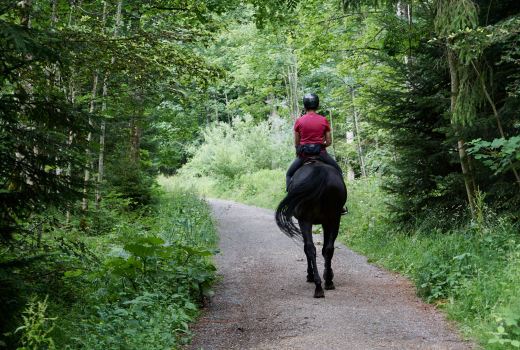
There is a tearing, crunching sound nearby. You can’t turn your head but realise it’s your horse, cropping the grassy verge. You try to croak her name but nothing comes out.

*

Bella at university. Charlie in Manchester. But Hannah, at school. You’re supposed to pick her up after hockey.

*

You feel surges of agony and anger, simultaneously. But nothing from the waist down.

A soundtrack of blame is running through your mind, complete with the memory of your husband’s disapproval that you continued to ride after your children were born. You made a point of hanging on to one thing that was your own.

*

The rain has eased and the clouds are thinning out. The grey sky behind them is whitening. Watching the clouds becomes compelling.

*

The lane is silent, apart from Rosie grazing.

*

You wonder what your ex will think, even though he’s eight years out of the picture.

*

Your sister will have to fetch Hannah. Though the rain has stopped, your cheeks remain wet.

*

You as a girl, about ten, running down the tree-lined street where your parents lived, being chased by a barking dog.

*

There is an unfinished canvas in your studio, the ocean painted in loose strokes. You’d been working on the children playing in the sand. It’s shaping up to be one of your best pieces.

*

Hannah has inherited your artistic skills, but she needs to apply herself.

*

You heard the van barrelling up from behind. You stayed still in the saddle and waved an arm downward to signal he should slow. He didn’t.

*

Rosie has always been good in traffic but no horse can be expected to behave if a van side-swipes them at 40 miles an hour.

*

She’s moving, at least.  You can hear her, still cropping, a little farther away now.

*

Now and again you used to wonder if the risk was worth it. Worth the joy, the sense of freedom. The deep contentment. The beauty of the land. You don’t remember coming to a conclusion.

*

Watching the clouds from this angle is peaceful. You regret that you never made time just to lie down and look up.

*

Love sears your heart. Bella stumbling in the middle of her ballet recital, going on to win a standing ovation. The fear, rushing Charlie to hospital when he got stung by a bee.

*

Hannah’s delighted sweaty face, lofting the hockey trophy with her teammates last year.

*

In the distance, you hear a car coming down the lane, but the world has swivelled; the clouds, now, appear to float beneath you. You turn your gaze from the whiteout and look up to see higher.

***

Sarah Sibley is a writer and baker who lives in Durham with her family. As a cake artist, she has written extensively on baking for various newspapers and magazines. This is her first published piece of fiction.

Shooter Flash: “Drifting Apart” by Gordon Pinckheard

You can’t get very far away from each other on a 33-foot sailboat. Graham was sitting in the cockpit, Linda on the foredeck. There were about twenty-five feet between them. They both wanted more.

There was a bump against the hull.

*

Out in the middle of the Atlantic, there was not much to think about. Only one person to talk with, to relate to, to be irritated by. Graham knew the right way to do things on a boat; he had taken courses, Linda had not. He carefully explained what she was doing wrong, but she ignored him. Her knots came undone, the sails flapped; they were not making the progress that he expected.

With only the two of them on board, watches were tough. Neither of them got much sleep. Alone in the cockpit at night, sliding between dreams and dark night, Graham had fantasies. Fantasies of freedom. The company of another woman, a younger woman, a better woman. Sometimes, a naked woman.

Linda was seasick. Pills did prevent vomiting, but she complained of stomach cramps and headaches. She refused to cook, unable to keep her balance down in the swaying interior.

“I’ll be glad when this is over,” she said.

“Over? Don’t say that. After this crossing, there’s the coast of Europe to explore! Wandering port to port. It’ll be great!”

“No,” Linda spat. “We’re using my money, and I say no. Once we’re across, we stop, settle down. Stop moving.” Her face was pale, taut.

Graham clamped his mouth shut. After a pause, he said, “OK, if that’s how you want it.” Looking away from her, he scanned the empty horizon, the ridges of endless waves. Freedom, he thought. 

That night he couldn’t entice any naked women out of the darkness. “My money” occupied his thoughts. He had shackled himself to such a wife! They had only spent a fraction of her wealth. What was to happen to his big adventure? An adventure he had dreamt of since childhood. Freedom was sliding out of reach. Linda wanted to trap him in a “normal” house. Was he man or mouse? No way! Feeling reassured, he smiled as he dozed, conjuring satisfying fantasies. Fantasies of unfettered freedom, spending money. Without Linda.

*

There was a bump against the hull. Graham looked astern, expecting to see something floating away in their wake. There was a partially submerged buoy, but it was following them, attached by a short length of rope. The rudder must have caught a drifting buoy. He turned off the autopilot and moved the wheel, hoping the rope would slide off the blade. The wheel was stiff and hard to turn; the rope must have jammed between the top of the rudder and the hull.

They dropped the sails and, using a boathook, Graham tried to pull the buoy and its tether loose from the boat. Failing, swearing, he lowered the inflatable dinghy from the foredeck. Maybe the rope could be freed working at sea level. He really didn’t want to have to swim beneath the boat. The oars were stored away down below; he’d manage without them. He was about to get into the dinghy, still swearing, when Linda said, “I’ll do it.”

“No, I’ll do it,” he said. “I do everything else; I’ll do this too.”

“Piss off! You don’t do everything. I’m fed up with you making a martyr of yourself. There’s no one else here to impress. I’ll be glad to get off this damn boat, even if it’s only for ten minutes.”

“OK, let’s see you do it then.” He sat down in the cockpit and watched her clamber over the lifelines, down the steps on the transom into the grey inflatable.

She caught the buoy’s rope and looked up at Graham. “You’ll have to move the dinghy forward,” she said. “I have to pull the rope forward, not back.”

He untied its painter from the stern and dragged the dinghy forward along the hull. He tied the line around a stanchion.

In the dinghy, Linda pulled at the buoy’s rope. It came loose, and she dropped it in the water. The partially submerged buoy and its rope drifted away from the boat.

“See? I got that done. I don’t need to hear any more of your crap. Now move me back to the stern.”

Graham looked down at her.

“Not hear more of my crap? Fair enough. Goodbye, Linda.” He bent down to the knotted painter.

Briefly, she sat frozen. Then she rushed to the front of the dinghy, balanced precariously on the inflated tube, and reached up to grab him. Her left hand caught his jacket while her right struck at his head. Ignoring the blows, he remained leaning forward, working at the knotted painter. With all her weight, she pulled him down towards her, pummelling his head. He toppled into the well of the dinghy, landing awkwardly. She fell onto his back, striking at him with both fists. He rolled over, protecting his head with his forearms while they struggled.

“For God’s sake, quit it!” The fear and desperation in his voice stopped her. The painter was caught around his arm – the loose painter.

They looked towards their sailboat, across clear water; wind was blowing the boat and dinghy apart faster than either of them could swim.

Silently, Graham moved to the stern, leaving Linda alone at the bow. The endless sea surrounded them, the horizon broken only by a single receding sailboat. There were about three feet between them. There would never be more.

*      *      *

Gordon Pinckheard lives in County Kerry, Ireland. Retired from a working life spent writing computer programs and technical documents, and encouraged by Thursday Night Writers (Tralee), he now writes anything he likes to entertain himself and – hopefully – others. His stories have been published by Daily Science Fiction, Gemini, Page & Spine, Allegory, Every Day Fiction, Flash Fiction Magazine, and others.

Shooter Flash: “King of the Castle” by Ben Shepherd

Rain like ash began to fall in the glade. Richard ducked beneath the oak and curled into the arch of the split trunk. The rain fell harder, greying the view. He would wait. There wasn’t much to do but wait, anyway; the money was gone, all gone. What a way for a king to go.

Richard sagged against the rough bark, letting the ridges gouge, and stared across the lawn at the streaming stone of his home, his ruined castle. All he had lost – all he had worked for, taken from him. Governments! Bloody taxmen, baying for handouts. He hadn’t come from much, but he’d battled and built an empire. His mother had called him king, even as a child. A king deserved to keep what was his.

A door opened amid the stone flank of the house and a blond head, speckled with silver, appeared. Richard crabbed behind the trunk. The wet world was quiet, but thoughts still bellowed round his head, like a hound chasing its tail. He closed his eyes.

“Richard,” a voice snapped from across the clearing.

He opened his eyes to see the familiar iron figure, slim but rigid, like a crowbar. Her arms were folded, her back braced against the rain: Theresa.

“Hello Terry,” he said, aiming for lightness. His voice sounded strange, even to him. He couldn’t go out in public any more, among people interacting normally. He no longer knew how they did it.

“I’ve been looking for you,” she said wearily. “Dinner’s ready.”

“Oh?” Richard paused. “What is it?”

“It’s cold, at this point. That’s what it is.”

“I think maybe I’ll just stay here.” Meek, supplicating. He hated himself.

“Come on. Enough of this.” Theresa advanced across the glade.

“No! No!” Richard shrieked, hysteria spiralling. He shrank into the tree. “It’s raining! The water will come through the roof! We can’t fix it, Terry! You know we can’t!”

“Come on,” said Theresa, grasping his arm. The thin cotton of his sleeve, soaked transparent, clung to the bulbous knots of his veins.

Richard snatched back his arm. “It’s terrible, Terry,” he moaned, looking at her with limpid eyes, a washed-out blue. Theresa sighed.

“What is?”

Richard gazed at her in silence, shaking his head. The few wisps of his hair had come unstuck and waved softly, wilting to the wrong side of his temple.

“Don’t worry,” she said, “about the water. If it comes through again we can fix it.”

“We can’t,” Richard insisted. “We can’t afford it.”

“Richard, we can.” Theresa took his arm again. “Don’t be so ridiculous.”

“But you don’t understand!” he wailed. “You don’t know!”

“I know you did something very silly,” she said grimly, turning to march him back. He resisted for a moment, weeping, then allowed himself to be steered between the trees.

The kitchen was warm. Richard slid into his chair, compliant, while Theresa opened the oven. A cloud of mushroom and onions puffed out.

They ate quietly, rain pattering. Theresa felt the familiar wrench of yearning for the children, now grown, twined with relief that they weren’t around to endure what was happening at home. 

“You know,” Richard said in a reasonable tone, “if you would just let me explain – if you could understand the problems…”

He jumped as Theresa’s hand slammed the table.

“That’s enough,” she said. “There are no problems. Just ordinary things that everybody has to deal with.”

“Everybody doesn’t deal with this,” he snarled. “The roof is leaking! We’ve got rot in the timbers in the barn, the heater for the pool doesn’t work, the shutters don’t close in Samantha’s room…”

“It’s just maintenance.”

“… the dryer doesn’t dry properly!” Richard shrilled.

“It doesn’t matter, can’t you see?”

“But how are we going to pay for it? We don’t have the money!”

“We do have the money, Richard, for God’s sake!”

Richard cast back his head and started keening, an unnatural sound – like an elephant, thought Theresa wildly, or an old woman. A crazy, selfish old madwoman. Just like his mother.

“Stop it,” she hissed. “Shut up.”

The rage fizzed up like a shaken soda bottle and, through her fist, burst out upon Richard’s face. The faraway despair in his eyes flamed to bewilderment, then shock.

“You hit me!” he shrieked, scrambling out of his chair. “You hit me!”

Theresa tasted a brief surge of satisfaction, like a savory drop of blood. Swiftly, anger and sorrow soured the rush. He had driven her to this; what else could she do? Doctors were no help. He had brought this upon himself, and upon her. His selfishness would destroy their whole family.

She stood up and stepped away. Richard was quailing in horror, tentatively touching his face.

“I’m sorry,” she said. Stepping towards him, she felt a stab of guilt as he flinched. “Let me see it.” A patch of red bloomed across the furrows of his cheek. 

“Richard,” she said, laying a hand on the crook of his arm, “it’s all so unnecessary.” His eyes flared, but he didn’t move, like a cornered animal.

“You wanted this house,” he spat. “You insisted on it. I didn’t want it. You wanted it, and now we have all these problems.”

“The only problems we have, Richard, are the result of you fiddling your taxes!”

“Fiddling taxes,” he scoffed. “That’s not…”

“You think the rules don’t apply to you,” Theresa stormed. “This is what comes from being raised in a crazy family. Who calls a child a king?” she sneered.

Richard stared, defiant.

“The problems in this house,” he started.

“There are no problems!” Theresa screamed. “You are the problem! It’s all in your mind!”

Theresa, his iron queen, broke down. Sobbing, she fled the room. Her tears triggered his own and, once more, Richard began to cry. Sooty streaks found the crevices in his crumpled face and filled them like runoff from a blackened river. One by one the stones of the castle in his mind came tumbling down around him.

*

Ben Shepherd has published short stories in Crimewave, Fictive Dream, London Magazine, and Magma. He was runner-up for Writing Magazine’s Grand Flash Prize, and is currently assembling his first short story collection. He lives in Leeds.

Shooter Flash: “Third Date” by Crystal Fraser

By the time the moths appeared, it was too late. Somewhere, buried in the folds of scratchy wool and inherited cashmere, immune to desiccated lavender and scent-faded cedar balls, eggs had already been laid. Larvae, microscopic, fed on the fabric, ate through it and, come spring, took flight in winged form. The small brown moths were the worst: a sure sign of holes to come.

Nina had already spied several of the pests that week. Now, she closed in on one marking her apartment wall, a tan smudge almost camouflaged upon the scarred, flaking paint. The moths never moved quickly; even if they did fly off, they fluttered weakly, like dust swirled by a subway gust. This one stayed put. Nina plucked it, rolled her fingers together and brushed off the remains. Particles of wing, paper-thin, drifted into the trash can beside her easel. It was too late to save one of her few pairs of silk underwear; with a little more larval lunching, Nina might pass it off as a crotchless panty. But she could, at the very least, take revenge.

She held up the undergarment towards the light filtering through the smut-greyed window, which was large but, as it overlooked the subway line and the Brooklyn-Queens Expressway, enabled more soot- than sun-trapping. Little holes sprayed the fabric as if it had been caught in a miniature drive-by. Given the amount of attention men had paid to her lingerie in recent years, it didn’t much matter; Nina may as well go commando. She felt mournful all the same, balling up the underwear and tossing it the way of its muncher. It was a relic of years past, a time when someone might have admired her in it but, despite the leaner body of youth, she hadn’t had the courage to flaunt it. Just to buy lingerie on rare occasions, to please herself. And now that she had dug it out to consider wearing it, it was no longer an option.

*

Crystal Fraser’s stories and essays have been published in Alaska Quarterly Review, MacGuffin, The Iconoclast, Potato Soup Journal, Flash Fiction Magazine, and elsewhere. She teaches high school history in Indianapolis, where she lives with her husband and two kids.

Shooter Flash: “The Oak” by Jennie Stevenson

“And this is you,” says Eva, showing me into my new home.

It’s pleasant enough – The Oaks is very upmarket – but we both know what it really is: death’s waiting room. My things, already delivered, are the pitiful sum of an entire life: trinkets, books, photo albums I haven’t opened in years. At least my wardrobe is a rainbow of velvets and silks.

A vase of spring flowers stands on the table, from Eva, and my eyes prick with tears. How long has it been – if ever – since someone gave me flowers?

There’s a soft thwock from outside: my flat, on the first floor, overlooks the tennis court. A man in tennis gear is exiting the court, an elderly woman on each arm, laughing. His hair is white, but his shoulders are broad, his arms still muscular and tanned. 

“Found the quarterback,” I murmur. The kind of guy who would never notice me.

Eva laughs. “That’s Tom. He’s quite popular with the ladies.” I bet.

My new doctor arrives. I notice Eva stealing glances at him as he checks over my medical records, and I don’t blame her – if I were a few years younger, I might have flirted with him myself.

They leave and the room feels empty. I need some air.

*

When I reach the huge oak in the centre of the retirement village, I stop to rest my aching hips on the bench curving around its trunk. A voice startles me: the jock, a ribbon of sandpaper between his fingers.

“Hi. I’m Tom.”

He’s carving ornate patterns on the arm of the bench: leaves, flowers, birds.

“Oh! It’s beautiful. You’re a woodworker?”

He smiles. “Used to be. Still am when my hands let me. You?”

“I’m… I used to be a travel writer.”

He sighs. “I would have loved to travel. What was your favourite place?”

I laugh. “I can’t choose. It would be like choosing a favourite child.”

“Tell me about them.” So I do. I tell him about haggling for spices in the crowded passages of Istanbul’s Grand Bazaar, the drifting cherry blossom in Kyoto in spring, the dizzying cliffs of the Italian riviera. After a while he stops carving, closes his eyes and listens so intently I think he’s fallen asleep.

When I’ve finished, he asks, “Do you play chess?” When I say no, he laughs and says he’ll teach me. “Same time tomorrow?”

*

His chess set is exquisite. “I’ll make you one too,” he tells me. “My shelves are full, and if I offer to make anything for the ladies here they’ll only get the wrong idea.” Subtext: he can offer one to me, because he couldn’t possibly be interested.

“No grandchildren?” I ask, lightly.

He sighs. “No. I never – met the right person. I was engaged once, but for the wrong reasons, so I broke it off. You?”

“No. Same.” Our eyes meet – a fleeting understanding? Or am I kidding myself?

*

As the branches above us turn green, he teaches me to play chess, and then he carves a set for me. I bring my photo albums, the pages sticking together, and show him places I’ve been and known and loved, and sometimes he carves and sometimes he just closes his eyes and listens. 

Then he brings his photographs to show me: cribs that will become family heirlooms, a bookcase for an eccentric professor, a couple of fiddles he made just for the challenge of it.

One day, we find a couple locked in an embrace on what I’ve come to think of as our bench: Eva and the doctor. I wink at her as they disappear toward the doctors’ quarters.

*

Eva stops by our bench a few weeks later, smiling as she looks from one to the other of us. Above, the leaves are just starting to turn.

I ask about the doctor and she tells us that they’ve split. “I want to focus on work… and honestly? He’s kind of a dick.” 

Tom laughs heartily, but after she’s gone, his mood turns. “Sex before marriage, career before a relationship… It’s a different world to the one where we grew up. Makes me wonder how things could have been different…” He sighs. “In the next life, I guess.”

“Do you believe in reincarnation?”

He shrugs. “I don’t know. I just want to believe I could have a do-over. It’s only when you get to the end you realise what really matters.”

“What would you do differently?”

He shrugs again. “Travel?” He places his hand next to mine, and my blood fizzes. “Be braver.” He slips his hand over mine, and my heart judders in my chest. “And I hope… I hope I would have met you sooner.”

I turn toward him, and our eyes meet, and then he kisses me. And I’m aware of everything and nothing: the thousand sighing leaves above us, his hand cupping my face, the solid bench beneath us and the beating of my heart. He breaks off and smiles at me. “Same time tomorrow?”

*

I’m woken by hammering on my door. The world outside is cold and grey, shrouded in fog.

Eva. She’s holding something in her hands, but it’s her eyes I notice first: they’re swollen and red.

“I’m sorry. This should get easier, but it never does. And I wanted to be the one to tell you.”

His huge heart: a massive heart attack.

“I think he would have wanted you to have this.” 

She hands me the object: a carving of two figures on a bench, hand in hand, their foreheads touching, one with broad shoulders and still-muscular arms. I see the sharp crease in my trousers, the scarf in my pocket, my neat goatee: how clearly he saw me. How much love went into this. How much time we wasted. And across the bottom, the flowing inscription: To Jack, until the next life. All my love, Tom.

*  *  *

Jennie Stevenson is an English graduate currently working as a freelance content writer. Born and brought up in the north of England, she now lives in southern Sweden with her husband, where they are comfortably outnumbered by their children and pets.

Shooter Flash: “Gentleman’s Relish” by A. S. Partridge

Ryan scrolled through his cache of hotties, looking for the girl eating watermelon. He’d accumulated mostly blondes and the golden manes blurred into a comet streak down the screen of his phone. Quickly, he scanned for the flash of crimson. He needed a quick reminder before their date, for which he was going to be late. Not that he cared.

There: the juicy bite, the tilt of the head, the sexily blackened eyes stopped him like a traffic light. Jana. They’d been messaging for about two weeks. The usual banter, followed by sexting, plus a bonus shot of her in a latex nurse outfit. 

Conveniently, Jana had agreed to meet him at the Looking Glass Cocktail Club, right around the corner from his apartment building, a new five-story development thrust up against a railway arch down a dingy Shoreditch side street. Ryan pushed into the cocktail bar and immediately spotted his date, perched at a corner table, crossed legs punctuated by four-inch stilettos.

“Heyyy,” she squealed, struggling upright to smooch him on the cheek and enveloping him in a fragrant mist.

“Jana. Good to finally meet you.” Ryan deepened his voice slightly. “Can I get you a drink or,” he nodded in the direction of her fruity concoction, “are you okay for now?”

“I’ll have another,” Jana purred, twisting a lock of hair around her finger.

Ryan went to the bar and ordered his usual, a Gentleman’s Relish – gin, something ginger, rhubarb bitters and a splash of tonic – and a Twisted Sister for Jana, with its exclamations of citrus rind. By the time they’d covered the standard topics of work, travel, and where they’d grown up, Jana was leaning into him, fingering the edge of his jacket.

“Your texts were really funny,” she said, “but I didn’t realise what a sweetheart you’d be in person.”

“No-one at work knows that about me,” Ryan sighed, looking deep into her eyes. “They all think I’m a robot. But I feel comfortable with you. You have such a calming energy.” Jana’s eyes grew large as she smiled back at him: widening pupils, a sure sign of attraction.

“Let’s get out of here,” he murmured.

Jana seemed amused to discover how close by he lived, but she more than willingly tottered over to his place. They kissed in the lift, and by the time Ryan opened his front door, Jana was clawing him like a cat on a scratching post.

He’d tidied up beforehand. The duvet – a masculine brown – was smooth on the bed. The side lamp cast a dim glow. Ryan pulled her onto the bed and resumed kissing her, stroking her back until she was ready for more. Soon enough, Jana rose and started tugging at the buttons of his shirt. He eased off her top, plucking open the buttons of her jeans in preparation, then turned his attention to her chest. As he ran his hands over her curves he realised, with disappointment, that her bra was heavily padded. Quickly he reached around to unhook the back but as the bra fell away, Jana flattened him and pressed her mouth ardently against his.

He let her writhe around on top of him for a while, then flipped her over and reached into her jeans. Jana’s hips began moving more violently against his hand and soon she yanked herself upright, peeled off the rest of her clothes and began tugging at Ryan’s trousers. She seemed pretty intent; he might get away without using a condom. She wasn’t pausing. He was just going to let her ride.

When it was over, Jana collapsed beside him. She was panting and sweaty, but Ryan didn’t mind, now that it was finished. He let the dopamine wash him into a doze.

Later, he woke to Jana padding back from the bathroom, fully dressed.

“Hey,” she whispered, leaning over him. “I have to go.”

“Okay,” he said, feeling relieved. It was still ridiculously early; the sky past the edge of his blind glimmered weakly against the dark steel of the elevated railway tracks.

“Thanks,” she said, lowering to kiss him.

“Thank you,” he stirred himself to utter with sincerity.

The next few weeks were rammed as usual. He fit in a few fresh Tinder dates, keeping up the rotation. He thought about following up with Jana, but decided not to bother.

He was snatching lunch in the middle of a frantic day of meetings when his phone pinged and the watermelon materialised on his screen.

Hey Ryan, hope you’re well. Can we meet up this weekend?

Ryan smirked, fingers hovering. She’d probably been waiting for him to contact her while the frustration built to volcanic proportions. Why not see her a second time, he figured, starting to tap a reply. Toss her a pity bang. Then delete her.

He met Jana for dinner at a Vietnamese restaurant along the roaring Kingsland Road. He was there first this time and failed to recognise her when she walked in, wearing a blue sweater, flats and a bare face. Pretty cocky to make no effort, he thought. She strode over and coolly kissed him on the cheek. Where was watermelon girl? All her flirtiness had dissolved.

“Red or white?” he asked, feeling disgruntled. He took his time scanning the menu. Not much of a face to look at tonight anyway.

“I’m not drinking,” she said, settling down. He could feel her eyeing him. Jesus, was she about to give him a hard time? Ryan figured he’d get a glass of the more expensive Sauv Blanc, if he was just buying for himself. A large glass.

“Maybe I should get a bottle anyway,” he said, trying to shift the mood. “I’ll drink for two.” Her face split into a satisfied grin. At last. Maybe this wouldn’t be so bad after all.

“Perfect,” she said, opening the menu, “as it turns out that I’m eating for two.”

*

A. S. Partridge has published poetry, flash fiction, and short stories in numerous magazines including Aurora, Malahat Review, Popshot, Scribble, and others. She lives in Edinburgh, where she is working on a satirical novel about motherhood.

(Photo by Dainis Graveris on SexualAlpha)

Shooter Flash: “The Torturer’s Dog” by Edward Barnfield

“Look at him. Look at him.” 

Makis points a bony finger to the door, and we watch together as his dog, a dirty grey terrier, circumnavigates the sides of the room to reach us. 

“Going blind, you see. Old dogs, they stick to the walls.”

It takes about a minute for the animal to reach the sofa, and once it arrives it squats, pathetically, unable to summon the energy to jump to its master. Makis takes pity and lifts it to his lap. 

“Time beats us all in the end,” he says, scratching its raw pink belly.   

The apartment has high windows and art deco details, a sense of old-world expense, but most of the furniture is as raggedy as the dog. There are no curtains, and I’m distracted by movement on the balconies opposite. This neighbourhood has aggressively resisted the gentrification that has reshaped the rest of the city, and my eyes are drawn to a thin man in a red vest sunning himself. Makis points to my recorder, moves the moment along. 

“You have questions?” he says. 

“I’m interested in why you think you were recruited. What did they see in you?” 

He sighs and strokes the dog’s neck, and it makes a soft noise like a horse’s whicker. For a moment I think he’s going to go silent, or ask me to leave, and then –

“They picked good boys. Obedient. Families.”

“Middle class?” There’s a sneer in my voice I hope he doesn’t catch. 

“No, no. I don’t think there were three years of schooling between us. Just working boys who could swing a hammer. Who cried when they threatened our families.” 

“And did they?” 

He manoeuvres his pet onto a faded green cushion and rolls his sleeve up. There are five or six old scars on the back of his arm, thick as zebra stripes. 

“You want the communists to rape your sister, boy?” His voice is harsher, the memory of an old tormentor thickening his accent. “These were all in the first week. They heated a metal bar on a brasier, and you had to sit there and watch it glow.” 

I’d heard the stories, of course. The colonels wanted malleable young conscripts to help with interrogations. They sought out the illiterate and the apolitical, finding kids as young as fourteen and putting them in uniform. Of course, if your objective is brutality, you first need to brutalise. 

“Everything they wanted us to do, they did to us first,” he says. The scarred arm moves to pet the dog. 

“How long before they put you in the Special Interrogation Section?”

“A few months. They knew, you see, that I’d do what they ordered.” 

“How many men do you think you interrogated while you were there?” 

Makis sits back, stares out of the window. The man in red has moved inside, so I’m not sure what he is looking at. I wonder if I should repeat the question. 

“I wanted to be a painter when I was a child. Can you imagine? Six brothers, three sisters, yellow fever all over the countryside and I wanted to paint. Where could that idea have come from?” 

The anecdote hangs there, and for an uncomfortable moment I feel a swell of pity for the man, old and alone and unable to unravel his own mysteries. We always think of the lives of others as linear, but our own experience refutes that. Memories loom large, and the pain of long-ago wounds returns, until you’re left clinging to the walls because you can no longer see clearly.

Then I remember my purpose. 

“Makis, how many?” 

His gaze moves from the window and back to me. His voice drops to a whisper.

“Too many to count.” 

“Did you interrogate the politician, Konstantopoulos? The army major, Moustaklis? Did you know he never walked or spoke again after his release?” 

 “I don’t –”

“Do you remember the slogan on the walls, Makis? Do you remember what it said?” 

I’m conscious my tone is too angry now, and that my interviewee is staring at me with fresh eyes, wondering who this middle-aged woman in his armchair might really be and whether her journalistic credentials can be trusted. 

He shakes his head, silent. 

Those who enter here, exit either as friends or as cripples. Do you remember that?” 

The dog picks up on the tension in the room and growls faintly without raising its head. 

“Miss, I’m sorry. I’m an old soldier on a pension who volunteers at an animal shelter. That’s all. I made a full account of my actions to the tribunal, and even that’s been forgotten. Who I was, before this… It’s all gone. Why are you interested?”  

“They said you were the worst, Makis. The ones who survived, they said you were the cruellest on the punishment block.” 

“But they are gone too, my dear. Prisoners and guards, colonels and radicals. What does pain matter a generation later?” 

On one level, he’s right. The building that housed the Special Interrogation Section is now a museum celebrating the life of a leader of the liberation movement. The park behind it, where they dumped the bodies of those who couldn’t take any more, has three branded coffee shops and a fitness area. 

But then I think of my own experience, a father’s face I only knew from photographs. I think of how my mother withdrew from the world and stayed hidden even after the junta fell, and how – when she died last month, just shy of her centennial – she told me she had never forgiven them. I think of the hammer in my handbag. 

The dog stretches and half-rolls, half-falls off the sofa. It trots to me, its nose cold against my bare legs. Despite myself, I pat behind its ears. 

*

Edward Barnfield is a writer and researcher living in the Middle East. His stories have appeared in Ellipsis Zine, Lunate, Strands, Twin Pies Literary, Janus Literary, Third Flatiron, The Molotov Cocktail, Roi Fainéant Press, Leicester Writes and Reflex Press, among others. He’s on Twitter at @edbarnfield and Instagram at barnfieldedward.

Shooter Flash: “Free Solo” by Zach Sager

The rock loomed above Martin in the early morning sun, a vertical gray crag. After months of distractions he was finally upon it. The dark crevices felt warm beneath his powdered hands. His fingers curled into the holds, steadying his body, feet reaching for the slight ledges that jutted from the ragged rockface.

Climbing purified Martin’s mind. Thoughts of his ailing mother, his distracted wife, his teenage daughters, his precarious job – all fell away. In the moment there was only his grip upon the rock: the unyielding fact of it beneath his flesh, ascent his singular goal. Nothing else mattered when he was climbing, only the inching upwards, the pressure and push to scale the wall or the rock or the mountain. To daydream, to fret, to relax meant to fall.

Rachel had never shared his passion, but she’d accepted his disappearances on weekends and the occasional evening. She’d argued with him about the free solo documentary, but he’d imagined the sense of ultimate freedom, of exhilaration, that such feats must generate, and since watching the movie he’d been unable to shake his yearning. He’d always climbed with ropes – strapped into his harness, double-checking his safety gear – but not today.

At the start of his climb he’d felt a shiver of awe, but also excitement, looking up at the towering crest. He’d spent some time running his hands over the rock and contemplating his route. He felt light in his t-shirt, no dangling straps or clanging carabiners. Today he would push himself beyond his usual limits. He would taste the liberation of the free soloists.

Martin proceeded steadily, careful yet in the zone, testing footholds and feeling for cracks. He made slow but sure progress, looking neither down nor up but at the next portion of rock before him. His mind cleared; the rest of life drained away. There was only the pump of his blood and the strain of his muscles, a light breeze at his back and the faint fluting of birdsong in the background.

The crest of the crag remained far above him when Martin felt his arms begin to tire. Despite climbing since boyhood, middle age was taking its inevitable toll; his strength was not what it used to be. A ripple of panic intruded on his concentration and a cold sweat broke out across his brow. Reaching for the next hold with his toe, his leg began to scrabble against the rock, then seized up, and Martin felt himself begin to slip.

His sense of willpower and liberation flipped to full-bore fear as thoughts came rushing back: What would his girls do if they lost their father? How would his family cope with the trauma of sudden loss? How could he have been so cavalier with his safety? All in pursuit of an adrenaline rush. How could he ever have thought that might be the pinnacle of experience, when so many things were more important?

These things and more flashed though Martin’s mind as he came off the rock. His body scratched and bumped against the sharp surface; as he fell nine feet to the ground, he felt somehow absolved by the scrapes and bruises. They would tether him to his renewed perspective and, next time he came to climb the crag, he could go farther, knowing that he had brought his ropes.

*

Zach Sager is an attorney who lives in Delaware with his Boston Terrier, Heff. He writes, and climbs, in his spare time. This is his first published piece of fiction.

Shooter Flash: “Haunted” by Lucy Brighton

I didn’t think I would be the kind of ghost that haunts people, but here I am. I still go to school every day like I did before. What else is there to do? I keep hoping I will meet some other ghosts to show me the ropes. No luck so far.

When I first rose from the spot where I’d fallen, I looked at the scene. A noose swung from a bare tree branch. I imagined people gathered around professing a love for me in death that they never showed in life. I imagined my mother, dressed in black of course, wailing at the senseless loss of it all. And I was sure there’d be a memorial Facebook page; there’d been one a few years ago when April, three years older than me, had died in a car crash. 

I waited three hours before I realised that nobody was coming. So, I went home. I walked past my mum, sitting on the sofa with her coffee cup full of whisky and fooling nobody. She said nothing. Obviously. 

When I woke the next morning, I logged onto Facebook, eager to see if my memorial page was up. It wasn’t. They probably haven’t found me yet, I thought. 

That was three days ago. I walk the quiet corridors of my school, almost empty now that everyone else is in lessons. Sometimes I go to class; sometimes I don’t. There doesn’t seem much point in learning anything. I can’t imagine ghosts have to take GCSEs. I think again how much I wish there was someone else like me I could talk to, who I could ask about these changes, maybe someone to hug me.

Nobody hugged me before the rope on the tree. Nobody raced to my rescue to talk me down, like they do on TV. It was a quiet affair; the only sound was the rustle of autumn leaves in the wind. 

“Watch out,” I shout as someone ploughs into me, almost knocking me over. Then I remember my situation and feel ridiculous. They can’t see or hear me, so what’s to stop them even walking straight through me? 

I don’t stay in school long today; it’s too hard watching the others at break time. Their laughter and togetherness wrenches at whatever constitutes a heart for a ghost. 

I don’t go home either. The last two nights have been insufferable. I sat on the same chair as always; Mum, saying nothing, drank her whisky and watched the soaps. She never even cries. Maybe it’s her way of coping, I tell myself. 

I head to the graveyard. I mean, seems apt for a ghost, right? I count the rows: twelve rows down, fifth grave along. I sit beside the grave and touch the headstone, surprised that it feels cold to my touch. 

“It’s me, Dad,” I say, then look around to see if he’s there. He would make the perfect ghost guide. We could be together again at last.

“It’s Sophie, Dad. I’m dead now too so you can show yourself.”

Nothing. 

I think it will probably take time for him to get to me from wherever he is. I didn’t notice any passage of time, personally: one minute I was climbing the tree with the noose around my neck and the next I was a ghost. Maybe Dad goes to work, like I go to school, out of habit, for something to do. I wouldn’t even know how to get there – which bus would I catch? No, I better wait here. 

I sit for a long time. There’s a brief flurry of activity around sunset when people seem to walk their dogs. Then silence. I shuffle around on the cold grass. 

I feel certain he will return here when it gets really late. I let the excitement fizz inside me like popping candy. I picture his strong arms and his curly rust hair. And mostly, I think of his smile. It’s been almost a year and the picture of him in my mind is fading a little but the smile is burned into my mind’s eye. I know he will look the same, not like some ghoul from a horror film, because I still do. I haven’t changed a bit.

There’s a rustle. I listen, desperate for the tread of his heavy boots. The sound grows, definitely movement. Panic seizes me for a second. Maybe it’s a bear or a fox. So what if it is, I think, what harm can it do me now. I puff out my chest. 

Human steps. I could burst with anticipation, like a thousand Christmas mornings. I’m finally going to see Dad again.

Instead, in the moonlight, the person reveals itself as Mum. 

“Sophie,” she says, her voice heavy with tears.

Maybe she comes here to talk to us both.

“Sophie,” she says again, moving closer.

She can’t actually see me, so I stay put. 

“I’ve been worried, Sophie,” she says and crouches down beside me.

I look around the empty graveyard. 

“It’s time to come home, sweetheart,” she says and puts her arm around me. I can feel it – the weight of her arm and the warmth of her breath. 

“It’s time to come home, Sophie,” she says again, standing and pulling me up with her.

“I just wanted to see him again, Mum,” I say, following her toward the gate. 

“I know,” she says. “I know.”

*

Lucy Brighton is a Northern-based writer who has completed an MA in Creative Writing at Leeds Trinity University (Distinction). Her work has been published in Writers Forum, Journeys: A Space for Words, and Henshaw Press’s second anthology, as well as various websites and online magazines.

Shooter Flash: “Meta-metamorphosis” by Andreas Smith

As Gregor Samsa awoke one morning from awful dreams he discovered that he had changed in his squalid corner into a little man. He stood on his two pale legs, stretched out his two pale arms, stifled a scream, and nearly fainted.

This was no dream.

In the opposite corner his parents were fast asleep, head to head, their antennae lovingly entwined and their hard brown backs glinting in the first rays of the sun. Nearby his young sister, half sunk in the soggy green morsel of bread she had been sucking on for the whole of the previous day, looked almost angelic as that same sunlight crept towards her under the kitchen cabinet. All three slept on contented, engorged and satiated with life’s bounteous harvest, as if nothing at all could go wrong in this, surely the best of all possible worlds. It was, then, a typical morning in the life of a normal, happy family of cockroaches.

But something had gone wrong – something terrible. Gregor shivered, pulled a piece of foil from an old ball of dust and hair, and wrapped the foil round his shameful nakedness. A rusty pin, for months lying barely noticed in the den, he now took up and thrust through the foil to secure it.

His sister stirred first and, seeing the thing her brother had become, emitted a deranged clicking noise as she frantically pursued herself in circles. Not that the parents were much calmer: they scrambled out of the den onto the kitchen floor at the sight of their son’s transformation, their beloved handsome son, now this… this monster. The father, recalling his position as master of the den and realising, as cockroach patriarchs always have, the danger presented by the vast desert of a recently mopped kitchen floor, forced his wife back under the cabinet to the safety of the den, with its moist, fetid air, rotting fragments of food, and years of dirt drifted into random heaps. The three huddled together and, afraid even to blink, gawped at Gregor. He stretched out an arm, friendly or threatening, it mattered not: his father, drawing on his old reserves of cockroach courage, dashed at his son, butted him in the groin, and knocked him flat. Never was a snout put to better use than this! Meanwhile, wife and daughter, instinct conquering fear, rolled everything roundabout towards Gregor’s corner – dust balls, breadcrumbs, meat and cheese pellets, spent matchsticks, mucus-encrusted tissues – till Gregor was imprisoned behind a barricade of rubbish. He got up, brushed himself down, once again secured his modesty with the rusty pin, and peered through a gap in the barricade. “Father, mother, dear sister – it’s me, Gregor, your beloved son and brother!” At the awful noise, incomprehensible and unearthly, the family backed off. Certainly it was a Gregor, but of what sort?

Mother’s tears seeped.

But time moves on. Gregor’s sister, hunger again gnawing at her belly, crawled over to her putrid soggy green breakfast and sank her face in it. Mother poked her wet snout through the gap and, despite everything, gazed lovingly at her son. He was busy tidying up his corner, as if disgusted by the lovely filth in which he had been fortunate enough to be hatched. It pained her to see how ungrateful he now was as he gracelessly paced back and forth on his thick and ugly white legs, his once comely face now an ugly mask of disgust and disapproval. Father, dining on a dainty morsel of rotten bacon and occasionally glancing through the gap, suddenly brought up the contents of his stomach and, no doubt stirred by fatherly obligation, vomited them towards Gregor (his only son, after all). But Gregor, even more disgusted than before, ignored his father’s offering. Let him starve then, like the countless ungrateful wretches before him!

As the days passed and the old normality became a faded dream, the family learned to bear their affliction. It was unfortunate that Gregor’s mad repugnance at filth and squalor had led to his living quarters deteriorating into a state of the utmost cleanliness (his poor house-proud mother could hardly bear to look), but even more disturbing was his rejection of any food at all, even the splendid lump of cat vomit his sister, at immense effort, had barged all the way across the kitchen to the den and then through the gap – only for her beloved brother to turn his back on her! So, while they gorged themselves on the fruits of the earth, Gregor, whose share of these fruits was his by right, became thin and weak, and was soon just a bag of bones, whining and wheezing and muttering gibberish to himself in his corner, the food that he once relished no longer the equal of his fastidiousness. No one now bothered to shore up the crumbling barricade: only a fantasist would look upon its pathetic prisoner as some dangerous monster, plotting evil against the world as he lurked in infernal cleanliness.

It was the mother’s mournful scrabbling which announced Gregor’s final end. There was much moistness in their eyes that morning, though it soon dried up. Life goes on, after all. They considered eating Gregor, but an old taboo, its origins lost in the mists of time, held them back. His parents dragged the corpse to the cat bowl at the far end of the kitchen. On returning to the den, they were pleasantly surprised to see that their daughter, stretching her many legs and tucking into a tasty titbit of something or other, was on the verge of becoming a fully grown cockroach in her own right, indeed a great beauty.

*

Thus did Hermann Kafka, canny businessman and father of Franz, an obscure author, strive to outdo his son, whose literary ambitions he scorned. But the son was more cunning than the father imagined: he stole his father’s crude fairy-tale, turned it on its head, and wrote a Metamorphosis of his own.

* * *

Andreas Smith has published stories in several UK literary magazines, including Monk and Storgy. He has also written several novels and is now represented by the David Grossman Literary Agency in London. He lives in County Durham and works as a freelance editor, though he sometimes travels to India for several months at a time to write in cafes while drinking chai and watching cows pass by.