Coming of Age issue explores sex, loss, and startling changes

Readers of the Coming of Age edition will note a discrepancy between the issue date of Autumn/Winter 2024, and the publication date of May 2025. Sadly this was caused by the rapid decline and death of my mother, Anita White, during the early months of 2025. 

Being in midlife myself, I was somewhat prepared for this inevitable though devastating loss. My mother was not terribly old at 77 but, pushing 50 myself, it still felt in the natural course of things.

For those who suffer such a bereavement during childhood, the loss of a parent can trigger the worst, most abrupt transition to adulthood: a severe trauma that jolts them out of carefree innocence, straight into adult responsibilities and painful life lessons. Some of the pieces here grapple with this harshest of coming-of-age experiences, in particular Saturday Mars’ “An Ode to Dewey Dell Bundren”, a literary reflection on William Faulkner’s As I Lay Dying that opens the issue.

Approaching loss from the polar opposite direction, Probert Dean’s short story “A Thing That Presents Itself to the Mind” explores with black humour the demise of a very different sort of mother. Douglas Cole in “A Game of Chicken” and C S Mee in “Amy Sullivan” also tangle with death and the transitional impact it makes in their tales.

Another equally significant coming-of-age theme, sex and sexuality, crops up in much of the issue. “The Sex-Education Fairy” by Monterey Buchanan offers a fantastical method of getting embarrassing questions answered at school, while Paul Hammond’s “An Odd, Odourless Scent” takes a more oblique approach to such matters in rural Ireland. In her memoir “Love in a War Zone”, Alison Watson dissects her youthful recklessness from Budapest to New York City with honesty and verve, showing how using sex to gain love and validation rarely pans out.

The poets largely grapple with sex and death as well. Elizabeth Wilson Davies, Kait Quinn, Brian James Lewis, and Craig Dobson explore some of the thrills and implications of dawning sexuality in their poems, while Alison Tanik and Eugene O’Hare suggest the darker side. Kent Leathem and Emily Cotterill conjure burgeoning homosexuality, from the challenges of feeling like an outsider to the rewards of awakening sexual identity. Kevin Grauke, the only poet to engage with death, does so with poignant simplicity.

A few writers took a more left-field approach to the coming-of-age theme. In his poem “September Cohen”, Bradley Taylor muses on an alternate reality for musician Leonard Cohen. Cat Isidore closes out the issue with her surreal story “Milkteeth”, about a girl forced into a violent confrontation with her mother’s garden flora.

As the winner of the 2024 Shooter Short Story Competition, “The Bunker” by Dilys Lovell also appears in this edition. Competition winners are not bound by the magazine’s themes, but Lovell’s piece could easily fit the category, featuring a girl on a remote island who yearns to be free of parental constraints. Her sheltered existence is shattered by the imposition of the wider world, as well as an interloper who reflects the tension she feels between safety and the call to adventure.

It is apt that, following an edition about major change, the next issue (our twentieth) will mark the end of Shooter’s life as a biannual print magazine. Shooter will evolve, but the final print edition will be themed Sweet Hereafter, both in honour of my mother and to mark the end of Shooter’s print identity. As the Spring/Summer 2025 issue, it will follow hot on the heels of the Coming of Age edition – but as with all things that die, Shooter will not be gone, but simply carry on in a different form.

To order the Coming of Age issue, please visit the Subscriptions page. 
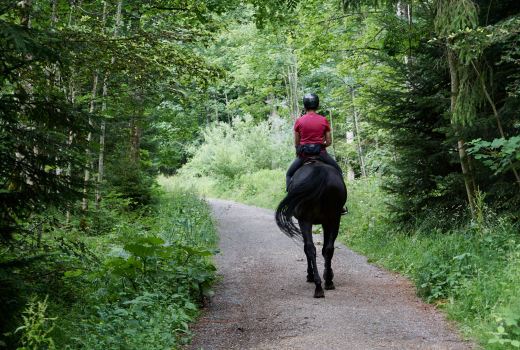
Shooter Flash: “Twenty Blinks” by Sarah Sibley

You feel the rain patter your cheeks and watch the grey clouds sagging above. The stubbled ground jabs into your back. 

*

There is a tearing, crunching sound nearby. You can’t turn your head but realise it’s your horse, cropping the grassy verge. You try to croak her name but nothing comes out.

*

Bella at university. Charlie in Manchester. But Hannah, at school. You’re supposed to pick her up after hockey.

*

You feel surges of agony and anger, simultaneously. But nothing from the waist down.

A soundtrack of blame is running through your mind, complete with the memory of your husband’s disapproval that you continued to ride after your children were born. You made a point of hanging on to one thing that was your own.

*

The rain has eased and the clouds are thinning out. The grey sky behind them is whitening. Watching the clouds becomes compelling.

*

The lane is silent, apart from Rosie grazing.

*

You wonder what your ex will think, even though he’s eight years out of the picture.

*

Your sister will have to fetch Hannah. Though the rain has stopped, your cheeks remain wet.

*

You as a girl, about ten, running down the tree-lined street where your parents lived, being chased by a barking dog.

*

There is an unfinished canvas in your studio, the ocean painted in loose strokes. You’d been working on the children playing in the sand. It’s shaping up to be one of your best pieces.

*

Hannah has inherited your artistic skills, but she needs to apply herself.

*

You heard the van barrelling up from behind. You stayed still in the saddle and waved an arm downward to signal he should slow. He didn’t.

*

Rosie has always been good in traffic but no horse can be expected to behave if a van side-swipes them at 40 miles an hour.

*

She’s moving, at least.  You can hear her, still cropping, a little farther away now.

*

Now and again you used to wonder if the risk was worth it. Worth the joy, the sense of freedom. The deep contentment. The beauty of the land. You don’t remember coming to a conclusion.

*

Watching the clouds from this angle is peaceful. You regret that you never made time just to lie down and look up.

*

Love sears your heart. Bella stumbling in the middle of her ballet recital, going on to win a standing ovation. The fear, rushing Charlie to hospital when he got stung by a bee.

*

Hannah’s delighted sweaty face, lofting the hockey trophy with her teammates last year.

*

In the distance, you hear a car coming down the lane, but the world has swivelled; the clouds, now, appear to float beneath you. You turn your gaze from the whiteout and look up to see higher.

***

Sarah Sibley is a writer and baker who lives in Durham with her family. As a cake artist, she has written extensively on baking for various newspapers and magazines. This is her first published piece of fiction.

Shooter Flash: “Drifting Apart” by Gordon Pinckheard

You can’t get very far away from each other on a 33-foot sailboat. Graham was sitting in the cockpit, Linda on the foredeck. There were about twenty-five feet between them. They both wanted more.

There was a bump against the hull.

*

Out in the middle of the Atlantic, there was not much to think about. Only one person to talk with, to relate to, to be irritated by. Graham knew the right way to do things on a boat; he had taken courses, Linda had not. He carefully explained what she was doing wrong, but she ignored him. Her knots came undone, the sails flapped; they were not making the progress that he expected.

With only the two of them on board, watches were tough. Neither of them got much sleep. Alone in the cockpit at night, sliding between dreams and dark night, Graham had fantasies. Fantasies of freedom. The company of another woman, a younger woman, a better woman. Sometimes, a naked woman.

Linda was seasick. Pills did prevent vomiting, but she complained of stomach cramps and headaches. She refused to cook, unable to keep her balance down in the swaying interior.

“I’ll be glad when this is over,” she said.

“Over? Don’t say that. After this crossing, there’s the coast of Europe to explore! Wandering port to port. It’ll be great!”

“No,” Linda spat. “We’re using my money, and I say no. Once we’re across, we stop, settle down. Stop moving.” Her face was pale, taut.

Graham clamped his mouth shut. After a pause, he said, “OK, if that’s how you want it.” Looking away from her, he scanned the empty horizon, the ridges of endless waves. Freedom, he thought. 

That night he couldn’t entice any naked women out of the darkness. “My money” occupied his thoughts. He had shackled himself to such a wife! They had only spent a fraction of her wealth. What was to happen to his big adventure? An adventure he had dreamt of since childhood. Freedom was sliding out of reach. Linda wanted to trap him in a “normal” house. Was he man or mouse? No way! Feeling reassured, he smiled as he dozed, conjuring satisfying fantasies. Fantasies of unfettered freedom, spending money. Without Linda.

*

There was a bump against the hull. Graham looked astern, expecting to see something floating away in their wake. There was a partially submerged buoy, but it was following them, attached by a short length of rope. The rudder must have caught a drifting buoy. He turned off the autopilot and moved the wheel, hoping the rope would slide off the blade. The wheel was stiff and hard to turn; the rope must have jammed between the top of the rudder and the hull.

They dropped the sails and, using a boathook, Graham tried to pull the buoy and its tether loose from the boat. Failing, swearing, he lowered the inflatable dinghy from the foredeck. Maybe the rope could be freed working at sea level. He really didn’t want to have to swim beneath the boat. The oars were stored away down below; he’d manage without them. He was about to get into the dinghy, still swearing, when Linda said, “I’ll do it.”

“No, I’ll do it,” he said. “I do everything else; I’ll do this too.”

“Piss off! You don’t do everything. I’m fed up with you making a martyr of yourself. There’s no one else here to impress. I’ll be glad to get off this damn boat, even if it’s only for ten minutes.”

“OK, let’s see you do it then.” He sat down in the cockpit and watched her clamber over the lifelines, down the steps on the transom into the grey inflatable.

She caught the buoy’s rope and looked up at Graham. “You’ll have to move the dinghy forward,” she said. “I have to pull the rope forward, not back.”

He untied its painter from the stern and dragged the dinghy forward along the hull. He tied the line around a stanchion.

In the dinghy, Linda pulled at the buoy’s rope. It came loose, and she dropped it in the water. The partially submerged buoy and its rope drifted away from the boat.

“See? I got that done. I don’t need to hear any more of your crap. Now move me back to the stern.”

Graham looked down at her.

“Not hear more of my crap? Fair enough. Goodbye, Linda.” He bent down to the knotted painter.

Briefly, she sat frozen. Then she rushed to the front of the dinghy, balanced precariously on the inflated tube, and reached up to grab him. Her left hand caught his jacket while her right struck at his head. Ignoring the blows, he remained leaning forward, working at the knotted painter. With all her weight, she pulled him down towards her, pummelling his head. He toppled into the well of the dinghy, landing awkwardly. She fell onto his back, striking at him with both fists. He rolled over, protecting his head with his forearms while they struggled.

“For God’s sake, quit it!” The fear and desperation in his voice stopped her. The painter was caught around his arm – the loose painter.

They looked towards their sailboat, across clear water; wind was blowing the boat and dinghy apart faster than either of them could swim.

Silently, Graham moved to the stern, leaving Linda alone at the bow. The endless sea surrounded them, the horizon broken only by a single receding sailboat. There were about three feet between them. There would never be more.

*      *      *

Gordon Pinckheard lives in County Kerry, Ireland. Retired from a working life spent writing computer programs and technical documents, and encouraged by Thursday Night Writers (Tralee), he now writes anything he likes to entertain himself and – hopefully – others. His stories have been published by Daily Science Fiction, Gemini, Page & Spine, Allegory, Every Day Fiction, Flash Fiction Magazine, and others.

Shooter Flash: “The Oak” by Jennie Stevenson

“And this is you,” says Eva, showing me into my new home.

It’s pleasant enough – The Oaks is very upmarket – but we both know what it really is: death’s waiting room. My things, already delivered, are the pitiful sum of an entire life: trinkets, books, photo albums I haven’t opened in years. At least my wardrobe is a rainbow of velvets and silks.

A vase of spring flowers stands on the table, from Eva, and my eyes prick with tears. How long has it been – if ever – since someone gave me flowers?

There’s a soft thwock from outside: my flat, on the first floor, overlooks the tennis court. A man in tennis gear is exiting the court, an elderly woman on each arm, laughing. His hair is white, but his shoulders are broad, his arms still muscular and tanned. 

“Found the quarterback,” I murmur. The kind of guy who would never notice me.

Eva laughs. “That’s Tom. He’s quite popular with the ladies.” I bet.

My new doctor arrives. I notice Eva stealing glances at him as he checks over my medical records, and I don’t blame her – if I were a few years younger, I might have flirted with him myself.

They leave and the room feels empty. I need some air.

*

When I reach the huge oak in the centre of the retirement village, I stop to rest my aching hips on the bench curving around its trunk. A voice startles me: the jock, a ribbon of sandpaper between his fingers.

“Hi. I’m Tom.”

He’s carving ornate patterns on the arm of the bench: leaves, flowers, birds.

“Oh! It’s beautiful. You’re a woodworker?”

He smiles. “Used to be. Still am when my hands let me. You?”

“I’m… I used to be a travel writer.”

He sighs. “I would have loved to travel. What was your favourite place?”

I laugh. “I can’t choose. It would be like choosing a favourite child.”

“Tell me about them.” So I do. I tell him about haggling for spices in the crowded passages of Istanbul’s Grand Bazaar, the drifting cherry blossom in Kyoto in spring, the dizzying cliffs of the Italian riviera. After a while he stops carving, closes his eyes and listens so intently I think he’s fallen asleep.

When I’ve finished, he asks, “Do you play chess?” When I say no, he laughs and says he’ll teach me. “Same time tomorrow?”

*

His chess set is exquisite. “I’ll make you one too,” he tells me. “My shelves are full, and if I offer to make anything for the ladies here they’ll only get the wrong idea.” Subtext: he can offer one to me, because he couldn’t possibly be interested.

“No grandchildren?” I ask, lightly.

He sighs. “No. I never – met the right person. I was engaged once, but for the wrong reasons, so I broke it off. You?”

“No. Same.” Our eyes meet – a fleeting understanding? Or am I kidding myself?

*

As the branches above us turn green, he teaches me to play chess, and then he carves a set for me. I bring my photo albums, the pages sticking together, and show him places I’ve been and known and loved, and sometimes he carves and sometimes he just closes his eyes and listens. 

Then he brings his photographs to show me: cribs that will become family heirlooms, a bookcase for an eccentric professor, a couple of fiddles he made just for the challenge of it.

One day, we find a couple locked in an embrace on what I’ve come to think of as our bench: Eva and the doctor. I wink at her as they disappear toward the doctors’ quarters.

*

Eva stops by our bench a few weeks later, smiling as she looks from one to the other of us. Above, the leaves are just starting to turn.

I ask about the doctor and she tells us that they’ve split. “I want to focus on work… and honestly? He’s kind of a dick.” 

Tom laughs heartily, but after she’s gone, his mood turns. “Sex before marriage, career before a relationship… It’s a different world to the one where we grew up. Makes me wonder how things could have been different…” He sighs. “In the next life, I guess.”

“Do you believe in reincarnation?”

He shrugs. “I don’t know. I just want to believe I could have a do-over. It’s only when you get to the end you realise what really matters.”

“What would you do differently?”

He shrugs again. “Travel?” He places his hand next to mine, and my blood fizzes. “Be braver.” He slips his hand over mine, and my heart judders in my chest. “And I hope… I hope I would have met you sooner.”

I turn toward him, and our eyes meet, and then he kisses me. And I’m aware of everything and nothing: the thousand sighing leaves above us, his hand cupping my face, the solid bench beneath us and the beating of my heart. He breaks off and smiles at me. “Same time tomorrow?”

*

I’m woken by hammering on my door. The world outside is cold and grey, shrouded in fog.

Eva. She’s holding something in her hands, but it’s her eyes I notice first: they’re swollen and red.

“I’m sorry. This should get easier, but it never does. And I wanted to be the one to tell you.”

His huge heart: a massive heart attack.

“I think he would have wanted you to have this.” 

She hands me the object: a carving of two figures on a bench, hand in hand, their foreheads touching, one with broad shoulders and still-muscular arms. I see the sharp crease in my trousers, the scarf in my pocket, my neat goatee: how clearly he saw me. How much love went into this. How much time we wasted. And across the bottom, the flowing inscription: To Jack, until the next life. All my love, Tom.

*  *  *

Jennie Stevenson is an English graduate currently working as a freelance content writer. Born and brought up in the north of England, she now lives in southern Sweden with her husband, where they are comfortably outnumbered by their children and pets.

Shooter Flash: “Haunted” by Lucy Brighton

I didn’t think I would be the kind of ghost that haunts people, but here I am. I still go to school every day like I did before. What else is there to do? I keep hoping I will meet some other ghosts to show me the ropes. No luck so far.

When I first rose from the spot where I’d fallen, I looked at the scene. A noose swung from a bare tree branch. I imagined people gathered around professing a love for me in death that they never showed in life. I imagined my mother, dressed in black of course, wailing at the senseless loss of it all. And I was sure there’d be a memorial Facebook page; there’d been one a few years ago when April, three years older than me, had died in a car crash. 

I waited three hours before I realised that nobody was coming. So, I went home. I walked past my mum, sitting on the sofa with her coffee cup full of whisky and fooling nobody. She said nothing. Obviously. 

When I woke the next morning, I logged onto Facebook, eager to see if my memorial page was up. It wasn’t. They probably haven’t found me yet, I thought. 

That was three days ago. I walk the quiet corridors of my school, almost empty now that everyone else is in lessons. Sometimes I go to class; sometimes I don’t. There doesn’t seem much point in learning anything. I can’t imagine ghosts have to take GCSEs. I think again how much I wish there was someone else like me I could talk to, who I could ask about these changes, maybe someone to hug me.

Nobody hugged me before the rope on the tree. Nobody raced to my rescue to talk me down, like they do on TV. It was a quiet affair; the only sound was the rustle of autumn leaves in the wind. 

“Watch out,” I shout as someone ploughs into me, almost knocking me over. Then I remember my situation and feel ridiculous. They can’t see or hear me, so what’s to stop them even walking straight through me? 

I don’t stay in school long today; it’s too hard watching the others at break time. Their laughter and togetherness wrenches at whatever constitutes a heart for a ghost. 

I don’t go home either. The last two nights have been insufferable. I sat on the same chair as always; Mum, saying nothing, drank her whisky and watched the soaps. She never even cries. Maybe it’s her way of coping, I tell myself. 

I head to the graveyard. I mean, seems apt for a ghost, right? I count the rows: twelve rows down, fifth grave along. I sit beside the grave and touch the headstone, surprised that it feels cold to my touch. 

“It’s me, Dad,” I say, then look around to see if he’s there. He would make the perfect ghost guide. We could be together again at last.

“It’s Sophie, Dad. I’m dead now too so you can show yourself.”

Nothing. 

I think it will probably take time for him to get to me from wherever he is. I didn’t notice any passage of time, personally: one minute I was climbing the tree with the noose around my neck and the next I was a ghost. Maybe Dad goes to work, like I go to school, out of habit, for something to do. I wouldn’t even know how to get there – which bus would I catch? No, I better wait here. 

I sit for a long time. There’s a brief flurry of activity around sunset when people seem to walk their dogs. Then silence. I shuffle around on the cold grass. 

I feel certain he will return here when it gets really late. I let the excitement fizz inside me like popping candy. I picture his strong arms and his curly rust hair. And mostly, I think of his smile. It’s been almost a year and the picture of him in my mind is fading a little but the smile is burned into my mind’s eye. I know he will look the same, not like some ghoul from a horror film, because I still do. I haven’t changed a bit.

There’s a rustle. I listen, desperate for the tread of his heavy boots. The sound grows, definitely movement. Panic seizes me for a second. Maybe it’s a bear or a fox. So what if it is, I think, what harm can it do me now. I puff out my chest. 

Human steps. I could burst with anticipation, like a thousand Christmas mornings. I’m finally going to see Dad again.

Instead, in the moonlight, the person reveals itself as Mum. 

“Sophie,” she says, her voice heavy with tears.

Maybe she comes here to talk to us both.

“Sophie,” she says again, moving closer.

She can’t actually see me, so I stay put. 

“I’ve been worried, Sophie,” she says and crouches down beside me.

I look around the empty graveyard. 

“It’s time to come home, sweetheart,” she says and puts her arm around me. I can feel it – the weight of her arm and the warmth of her breath. 

“It’s time to come home, Sophie,” she says again, standing and pulling me up with her.

“I just wanted to see him again, Mum,” I say, following her toward the gate. 

“I know,” she says. “I know.”

*

Lucy Brighton is a Northern-based writer who has completed an MA in Creative Writing at Leeds Trinity University (Distinction). Her work has been published in Writers Forum, Journeys: A Space for Words, and Henshaw Press’s second anthology, as well as various websites and online magazines.