Unsettling Tales Scoop 2023 Short Story Awards

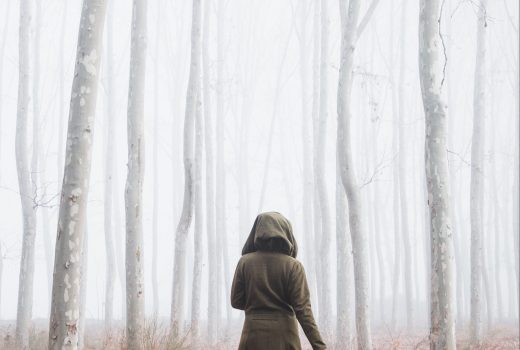
Alice Gwynn has won the 2023 Shooter Short Story Competition with her eerie, twisting tale, “The Ones Who Came Before”, while Edward Barnfield has come runner-up with his dystopian fiction, “Isolation”.

Shooter’s readers and judge, editor Melanie White, appreciated Gwynn’s atmospheric tale for its evocative descriptions and skilful handling of plot twists in a story with deeper undercurrents of identity and loss. Gwynn, a British ex-pat who lives in New Hampshire in the US, said via email that a trip to the UK last year inspired her piece, which is set in the grounds of an ancient castle. Gwynn writes flash fiction and poetry as well as short stories, and has previously published work in Prachya Review, Grey Sparrow Journal, Consequence Magazine, Wilderness House Literary Review, and elsewhere.

Barnfield achieved second place in the competition with “Isolation”, a subtle dystopian fiction with creeping menace that contest readers found particularly convincing. Barnfield, a researcher living in the Middle East, has had work published by Roi Fainéant Press, Ellipsis Zine, The Molotov Cocktail, Third Street Review, Galley Beggar Press, and others.

In addition to the contest winners, two writers gained honorable mentions for their stories: Bethany Wren, for “Rosemary, Patron Saint of Honey”, and Joe Wheelan, for “Unravelled”.

Both “The Ones Who Came Before” and “Isolation” are available to read on Shooter’s website, while Gwynn’s story also appears in the Autumn/Winter 2023 issue of Shooter, which is themed “The Unknown”. Print copies of the magazine can be ordered at the Subscriptions page.

The 2024 Shooter Poetry Competition will open early in the new year, while the 2024 Shooter Short Story Competition will open mid-year. Until then, prose writers are welcome to submit flash fiction and non-fiction to the monthly Shooter Flash contest on a rolling basis. General submissions for Shooter’s Spring/Summer 2024 issue will open to all in the new year.

In the meantime, happy reading, and happy holidays from Shooter Literary Magazine!

Shooter Flash: “A Good Son” by Sarah Macallister

Peter couldn’t come home for Christmas because his wife dragged him to her family. Susan always played the victim, but she was no wilting flower; she was a parasitic weed.

My son used to be an easy child. No tantrums. Other mothers had to tear themselves away from their children at the school gates, from guttural sobs that made your ears bleed. I pitied those mothers, who’d failed where I’d succeeded. 

I remember the first parent-teacher meeting. Mrs Forsyth sat across from us, wearing a frown and short hair. She reported that our son had stamped on another boy’s head. Peter never behaved that way at home. I knew it must be a mistake. At other parent meetings, we heard that he pulled hair, hit, stole food, and peed on a girl’s coat. Mrs Forsyth clearly didn’t like him, so I moved him to another school. After that, there were no bad reports. 

I started as keys jangled in the lock. Harold whistled and threw open the front door. 

“Something smells good! Baked a cake?” He squeezed around the table and pulled me into his stout stomach. Fruity hops blossomed from his mouth.

“Been at Dopey Does?”

“Don’t you mean The Staggering Stags?”

We snickered together, as if this was the first time we’d made this joke. After I knotted my pinny, I glugged oil into the frying pan and ignited blue flames. Bubbles frisked in the oil and I slid raw meat to sizzle. I laid the table with chutney and a vase of dried honesty. We tucked in. Harold drank another pint and the amber beer glowed while he tipped back his head.

“Heard from Peter today?”

“No, he’s too busy. Working late, poor boy.”

Cake for pudding. Harold poured custard over his bowl. Steam spiralled while he rummaged for a spoon, clanking the cutlery, and shaking the table as he shuddered the drawer shut. I ate mine with a dessert fork.

Not long after Harold climbed into bed, he was foghorn snoring. The harder I tried to ignore it, the more frustrated I grew, until tears streamed into my pillow. Rain lashed the roof and windows, the wet whipping of a cat o’ nine tails. The doorbell rang. 

I swiped my cheeks and flurried downstairs in my nightie. I clicked the hall lamp. My neck shivered as I reached for the handle. It was so late. Who could it be? An outline blurred in the pebbled glass. A man’s height.

“Mum?”

Only Peter. I fumbled to unlatch and clasp the handle, ready with my welcome smile. My thoughts drifted to the kitchen. I opened the door and threw a glow into the seething chattering darkness, which swallowed it whole.

Rain-dark hair plastered his scalp and he looked white, sick. As I fell back to let him enter, my smile fixed, he planted himself on the threshold and leaked on the flagstone floor.

“Peter, are you alright?”

He shook his head and shuddered within the sodden coat. His eyes wouldn’t meet mine.

“You’re cold,” I said, desperate to shut the night out, but Peter only stood by the door and twitched.

“Come in, love.” He shuffled forward and I sealed us safely inside. I trundled off to the kitchen and flicked the kettle to boil, tipping bags into red cups. I wondered whether to give Peter some cake.

“I made a mistake.” Peter spoke slowly, each syllable dropping like the rain. He hovered under the kitchen doorframe, coat on and dripping wet. I could not make the kettle boil any faster. I didn’t know what to do with my hands, so I turned and smiled.

“What?” I asked, but I didn’t want to hear. “Wait, let’s get you dried off first.” I wanted to scurry for towels and clothes, but Peter was blocking the doorway as he answered my question.

“I made a mistake.” His voice broke and a croaking, throaty gurgle slithered into my kitchen, raw like uncooked meat.

“Oh, everyone makes mistakes, darling. Now let’s get you warmed up with a nice cup of—”

He looked me right in the eye.

“A mistake,” he spat back at me. “Susan’s gone.”

Something unfamiliar crawled across Peter’s face. A sneer. He was sneering at me. 

Boiled water steamed from the kettle, its innards raging with bubbles, until the dainty click snapped it off. I turned my back on Peter and poured the tea. 

“Would you like your bag left in?” 

He didn’t reply, so I took a teaspoon and squeezed the bag against the side of the cup before fishing it out. I was meant to say something. My pathetic mother, he was thinking, who can’t face reality, whose eyes are cross-stitched shut. I didn’t know what to say. 

I held the scalding cup against my palm, so the handle faced Peter. He could either take it, or watch my face strain to remain calm as hot china burned my skin. He took it like a good son.

Shooter Flash: “Drifting Apart” by Gordon Pinckheard

You can’t get very far away from each other on a 33-foot sailboat. Graham was sitting in the cockpit, Linda on the foredeck. There were about twenty-five feet between them. They both wanted more.

There was a bump against the hull.

*

Out in the middle of the Atlantic, there was not much to think about. Only one person to talk with, to relate to, to be irritated by. Graham knew the right way to do things on a boat; he had taken courses, Linda had not. He carefully explained what she was doing wrong, but she ignored him. Her knots came undone, the sails flapped; they were not making the progress that he expected.

With only the two of them on board, watches were tough. Neither of them got much sleep. Alone in the cockpit at night, sliding between dreams and dark night, Graham had fantasies. Fantasies of freedom. The company of another woman, a younger woman, a better woman. Sometimes, a naked woman.

Linda was seasick. Pills did prevent vomiting, but she complained of stomach cramps and headaches. She refused to cook, unable to keep her balance down in the swaying interior.

“I’ll be glad when this is over,” she said.

“Over? Don’t say that. After this crossing, there’s the coast of Europe to explore! Wandering port to port. It’ll be great!”

“No,” Linda spat. “We’re using my money, and I say no. Once we’re across, we stop, settle down. Stop moving.” Her face was pale, taut.

Graham clamped his mouth shut. After a pause, he said, “OK, if that’s how you want it.” Looking away from her, he scanned the empty horizon, the ridges of endless waves. Freedom, he thought. 

That night he couldn’t entice any naked women out of the darkness. “My money” occupied his thoughts. He had shackled himself to such a wife! They had only spent a fraction of her wealth. What was to happen to his big adventure? An adventure he had dreamt of since childhood. Freedom was sliding out of reach. Linda wanted to trap him in a “normal” house. Was he man or mouse? No way! Feeling reassured, he smiled as he dozed, conjuring satisfying fantasies. Fantasies of unfettered freedom, spending money. Without Linda.

*

There was a bump against the hull. Graham looked astern, expecting to see something floating away in their wake. There was a partially submerged buoy, but it was following them, attached by a short length of rope. The rudder must have caught a drifting buoy. He turned off the autopilot and moved the wheel, hoping the rope would slide off the blade. The wheel was stiff and hard to turn; the rope must have jammed between the top of the rudder and the hull.

They dropped the sails and, using a boathook, Graham tried to pull the buoy and its tether loose from the boat. Failing, swearing, he lowered the inflatable dinghy from the foredeck. Maybe the rope could be freed working at sea level. He really didn’t want to have to swim beneath the boat. The oars were stored away down below; he’d manage without them. He was about to get into the dinghy, still swearing, when Linda said, “I’ll do it.”

“No, I’ll do it,” he said. “I do everything else; I’ll do this too.”

“Piss off! You don’t do everything. I’m fed up with you making a martyr of yourself. There’s no one else here to impress. I’ll be glad to get off this damn boat, even if it’s only for ten minutes.”

“OK, let’s see you do it then.” He sat down in the cockpit and watched her clamber over the lifelines, down the steps on the transom into the grey inflatable.

She caught the buoy’s rope and looked up at Graham. “You’ll have to move the dinghy forward,” she said. “I have to pull the rope forward, not back.”

He untied its painter from the stern and dragged the dinghy forward along the hull. He tied the line around a stanchion.

In the dinghy, Linda pulled at the buoy’s rope. It came loose, and she dropped it in the water. The partially submerged buoy and its rope drifted away from the boat.

“See? I got that done. I don’t need to hear any more of your crap. Now move me back to the stern.”

Graham looked down at her.

“Not hear more of my crap? Fair enough. Goodbye, Linda.” He bent down to the knotted painter.

Briefly, she sat frozen. Then she rushed to the front of the dinghy, balanced precariously on the inflated tube, and reached up to grab him. Her left hand caught his jacket while her right struck at his head. Ignoring the blows, he remained leaning forward, working at the knotted painter. With all her weight, she pulled him down towards her, pummelling his head. He toppled into the well of the dinghy, landing awkwardly. She fell onto his back, striking at him with both fists. He rolled over, protecting his head with his forearms while they struggled.

“For God’s sake, quit it!” The fear and desperation in his voice stopped her. The painter was caught around his arm – the loose painter.

They looked towards their sailboat, across clear water; wind was blowing the boat and dinghy apart faster than either of them could swim.

Silently, Graham moved to the stern, leaving Linda alone at the bow. The endless sea surrounded them, the horizon broken only by a single receding sailboat. There were about three feet between them. There would never be more.

*      *      *

Gordon Pinckheard lives in County Kerry, Ireland. Retired from a working life spent writing computer programs and technical documents, and encouraged by Thursday Night Writers (Tralee), he now writes anything he likes to entertain himself and – hopefully – others. His stories have been published by Daily Science Fiction, Gemini, Page & Spine, Allegory, Every Day Fiction, Flash Fiction Magazine, and others.

Issue 16: On the Body

The body is the house that we live in, whether it’s newly built or dilapidated, with sleek modern lines or sagging timbers. People might be content with the houses they inhabit, growing comfortable over the years in familiar rooms; others might be eager to embark on extensive renovations. We all hope to live in secure abodes but, without strong defences, their boundaries are sometimes breached.

Bodily contemplations inevitably revolve around fundamental milestones of birth and death, the physical dimension of love and the way we are perceived by others. Writers explore these themes and more in Shooter’s “On the Body” issue, our sixteenth edition of the magazine. 

Nolcha Fox opens the issue with her whimsical poem “Skin”, delicately depicting the membrane between our outer and inner lives. Elizabeth Tannen and Ruth Lexton craft lyric insights into childbirth and early motherhood, while Natalie Moores and Harry Wilding offer wry verses on physical desire and its consequences. Steve Denehan also provides a humorous interlude on the subject of temporary tattoos. On the darker side of bodily experience, David Holper challenges the suggestion that “America Is Not a Racist Country”, and James McDermott closes the issue with two poignant poems about the death of his father from Covid-19.

In addition to the issue’s poetic nuts and bolts, the spring/summer edition features the winner of the 2022 Shooter Poetry Competition: Jenny’s Mitchell’s “Female Dedication”, which revolves around hardships experienced by the narrator’s mother and grandmother. Mitchell has previously won the Poetry Book Awards; her debut collection, Her Lost Language, was named a “Poetry Book for 2019” by Poetry Wales and her second collection, Map of a Plantation, is on the syllabus at Manchester Metropolitan University.

Many of the edition’s prose writers skilfully combine humour and acute observation in their responses to the theme. Sarah Archer weaves comedy out of the despair of ageing (to forty-one years old) in her story “Ripe”. April Farrant challenges sexism and double standards in her political piece, “Set Menu”, while Mark Keane mines the strange standards of the art world in “Exhibition”. Sage Tyrtle considers how far a makeover might go in “Up Next on The Repair Store”. A sinister threat emerges in Nathan Breakenridge’s “Full of Trees”, and Alison Milner connects the dots of loss in her moving flash fiction, “Constellation”.

Several pieces of non-fiction also punctuate the issue, all very different. Ona Marae, in “No Apology Here”, provides a powerful account of the assault she experienced as a teenager and the wider prevalence of sexual violence in society. Robin Hall recalls financially challenging times in his L.A. memoir “Dance Like Everyone Is Watching”, about his brush with male striptease. And in the most literal interpretation of “On the Body”, Sally Gander considers the significance of tattoo art in her essay “No Commitment Necessary”.

Whatever environment you inhabit – cosy apartment or sprawling manor, stylish penthouse or sparse yurt – I hope you will settle down cosily within that most important of edifices, your own skin, to enjoy this diverse and compelling edition of Shooter.

To order a copy of the On the Body issue, please visit the Subscriptions page.

The 2023 Short Story Competition and general submissions to do with The Unknown are open to entries until September 24.

Shooter Flash: “The Torturer’s Dog” by Edward Barnfield

“Look at him. Look at him.” 

Makis points a bony finger to the door, and we watch together as his dog, a dirty grey terrier, circumnavigates the sides of the room to reach us. 

“Going blind, you see. Old dogs, they stick to the walls.”

It takes about a minute for the animal to reach the sofa, and once it arrives it squats, pathetically, unable to summon the energy to jump to its master. Makis takes pity and lifts it to his lap. 

“Time beats us all in the end,” he says, scratching its raw pink belly.   

The apartment has high windows and art deco details, a sense of old-world expense, but most of the furniture is as raggedy as the dog. There are no curtains, and I’m distracted by movement on the balconies opposite. This neighbourhood has aggressively resisted the gentrification that has reshaped the rest of the city, and my eyes are drawn to a thin man in a red vest sunning himself. Makis points to my recorder, moves the moment along. 

“You have questions?” he says. 

“I’m interested in why you think you were recruited. What did they see in you?” 

He sighs and strokes the dog’s neck, and it makes a soft noise like a horse’s whicker. For a moment I think he’s going to go silent, or ask me to leave, and then –

“They picked good boys. Obedient. Families.”

“Middle class?” There’s a sneer in my voice I hope he doesn’t catch. 

“No, no. I don’t think there were three years of schooling between us. Just working boys who could swing a hammer. Who cried when they threatened our families.” 

“And did they?” 

He manoeuvres his pet onto a faded green cushion and rolls his sleeve up. There are five or six old scars on the back of his arm, thick as zebra stripes. 

“You want the communists to rape your sister, boy?” His voice is harsher, the memory of an old tormentor thickening his accent. “These were all in the first week. They heated a metal bar on a brasier, and you had to sit there and watch it glow.” 

I’d heard the stories, of course. The colonels wanted malleable young conscripts to help with interrogations. They sought out the illiterate and the apolitical, finding kids as young as fourteen and putting them in uniform. Of course, if your objective is brutality, you first need to brutalise. 

“Everything they wanted us to do, they did to us first,” he says. The scarred arm moves to pet the dog. 

“How long before they put you in the Special Interrogation Section?”

“A few months. They knew, you see, that I’d do what they ordered.” 

“How many men do you think you interrogated while you were there?” 

Makis sits back, stares out of the window. The man in red has moved inside, so I’m not sure what he is looking at. I wonder if I should repeat the question. 

“I wanted to be a painter when I was a child. Can you imagine? Six brothers, three sisters, yellow fever all over the countryside and I wanted to paint. Where could that idea have come from?” 

The anecdote hangs there, and for an uncomfortable moment I feel a swell of pity for the man, old and alone and unable to unravel his own mysteries. We always think of the lives of others as linear, but our own experience refutes that. Memories loom large, and the pain of long-ago wounds returns, until you’re left clinging to the walls because you can no longer see clearly.

Then I remember my purpose. 

“Makis, how many?” 

His gaze moves from the window and back to me. His voice drops to a whisper.

“Too many to count.” 

“Did you interrogate the politician, Konstantopoulos? The army major, Moustaklis? Did you know he never walked or spoke again after his release?” 

 “I don’t –”

“Do you remember the slogan on the walls, Makis? Do you remember what it said?” 

I’m conscious my tone is too angry now, and that my interviewee is staring at me with fresh eyes, wondering who this middle-aged woman in his armchair might really be and whether her journalistic credentials can be trusted. 

He shakes his head, silent. 

Those who enter here, exit either as friends or as cripples. Do you remember that?” 

The dog picks up on the tension in the room and growls faintly without raising its head. 

“Miss, I’m sorry. I’m an old soldier on a pension who volunteers at an animal shelter. That’s all. I made a full account of my actions to the tribunal, and even that’s been forgotten. Who I was, before this… It’s all gone. Why are you interested?”  

“They said you were the worst, Makis. The ones who survived, they said you were the cruellest on the punishment block.” 

“But they are gone too, my dear. Prisoners and guards, colonels and radicals. What does pain matter a generation later?” 

On one level, he’s right. The building that housed the Special Interrogation Section is now a museum celebrating the life of a leader of the liberation movement. The park behind it, where they dumped the bodies of those who couldn’t take any more, has three branded coffee shops and a fitness area. 

But then I think of my own experience, a father’s face I only knew from photographs. I think of how my mother withdrew from the world and stayed hidden even after the junta fell, and how – when she died last month, just shy of her centennial – she told me she had never forgiven them. I think of the hammer in my handbag. 

The dog stretches and half-rolls, half-falls off the sofa. It trots to me, its nose cold against my bare legs. Despite myself, I pat behind its ears. 

*

Edward Barnfield is a writer and researcher living in the Middle East. His stories have appeared in Ellipsis Zine, Lunate, Strands, Twin Pies Literary, Janus Literary, Third Flatiron, The Molotov Cocktail, Roi Fainéant Press, Leicester Writes and Reflex Press, among others. He’s on Twitter at @edbarnfield and Instagram at barnfieldedward.

Shooter Flash: “Haunted” by Lucy Brighton

I didn’t think I would be the kind of ghost that haunts people, but here I am. I still go to school every day like I did before. What else is there to do? I keep hoping I will meet some other ghosts to show me the ropes. No luck so far.

When I first rose from the spot where I’d fallen, I looked at the scene. A noose swung from a bare tree branch. I imagined people gathered around professing a love for me in death that they never showed in life. I imagined my mother, dressed in black of course, wailing at the senseless loss of it all. And I was sure there’d be a memorial Facebook page; there’d been one a few years ago when April, three years older than me, had died in a car crash. 

I waited three hours before I realised that nobody was coming. So, I went home. I walked past my mum, sitting on the sofa with her coffee cup full of whisky and fooling nobody. She said nothing. Obviously. 

When I woke the next morning, I logged onto Facebook, eager to see if my memorial page was up. It wasn’t. They probably haven’t found me yet, I thought. 

That was three days ago. I walk the quiet corridors of my school, almost empty now that everyone else is in lessons. Sometimes I go to class; sometimes I don’t. There doesn’t seem much point in learning anything. I can’t imagine ghosts have to take GCSEs. I think again how much I wish there was someone else like me I could talk to, who I could ask about these changes, maybe someone to hug me.

Nobody hugged me before the rope on the tree. Nobody raced to my rescue to talk me down, like they do on TV. It was a quiet affair; the only sound was the rustle of autumn leaves in the wind. 

“Watch out,” I shout as someone ploughs into me, almost knocking me over. Then I remember my situation and feel ridiculous. They can’t see or hear me, so what’s to stop them even walking straight through me? 

I don’t stay in school long today; it’s too hard watching the others at break time. Their laughter and togetherness wrenches at whatever constitutes a heart for a ghost. 

I don’t go home either. The last two nights have been insufferable. I sat on the same chair as always; Mum, saying nothing, drank her whisky and watched the soaps. She never even cries. Maybe it’s her way of coping, I tell myself. 

I head to the graveyard. I mean, seems apt for a ghost, right? I count the rows: twelve rows down, fifth grave along. I sit beside the grave and touch the headstone, surprised that it feels cold to my touch. 

“It’s me, Dad,” I say, then look around to see if he’s there. He would make the perfect ghost guide. We could be together again at last.

“It’s Sophie, Dad. I’m dead now too so you can show yourself.”

Nothing. 

I think it will probably take time for him to get to me from wherever he is. I didn’t notice any passage of time, personally: one minute I was climbing the tree with the noose around my neck and the next I was a ghost. Maybe Dad goes to work, like I go to school, out of habit, for something to do. I wouldn’t even know how to get there – which bus would I catch? No, I better wait here. 

I sit for a long time. There’s a brief flurry of activity around sunset when people seem to walk their dogs. Then silence. I shuffle around on the cold grass. 

I feel certain he will return here when it gets really late. I let the excitement fizz inside me like popping candy. I picture his strong arms and his curly rust hair. And mostly, I think of his smile. It’s been almost a year and the picture of him in my mind is fading a little but the smile is burned into my mind’s eye. I know he will look the same, not like some ghoul from a horror film, because I still do. I haven’t changed a bit.

There’s a rustle. I listen, desperate for the tread of his heavy boots. The sound grows, definitely movement. Panic seizes me for a second. Maybe it’s a bear or a fox. So what if it is, I think, what harm can it do me now. I puff out my chest. 

Human steps. I could burst with anticipation, like a thousand Christmas mornings. I’m finally going to see Dad again.

Instead, in the moonlight, the person reveals itself as Mum. 

“Sophie,” she says, her voice heavy with tears.

Maybe she comes here to talk to us both.

“Sophie,” she says again, moving closer.

She can’t actually see me, so I stay put. 

“I’ve been worried, Sophie,” she says and crouches down beside me.

I look around the empty graveyard. 

“It’s time to come home, sweetheart,” she says and puts her arm around me. I can feel it – the weight of her arm and the warmth of her breath. 

“It’s time to come home, Sophie,” she says again, standing and pulling me up with her.

“I just wanted to see him again, Mum,” I say, following her toward the gate. 

“I know,” she says. “I know.”

*

Lucy Brighton is a Northern-based writer who has completed an MA in Creative Writing at Leeds Trinity University (Distinction). Her work has been published in Writers Forum, Journeys: A Space for Words, and Henshaw Press’s second anthology, as well as various websites and online magazines.

Shooter Flash: “Meta-metamorphosis” by Andreas Smith

As Gregor Samsa awoke one morning from awful dreams he discovered that he had changed in his squalid corner into a little man. He stood on his two pale legs, stretched out his two pale arms, stifled a scream, and nearly fainted.

This was no dream.

In the opposite corner his parents were fast asleep, head to head, their antennae lovingly entwined and their hard brown backs glinting in the first rays of the sun. Nearby his young sister, half sunk in the soggy green morsel of bread she had been sucking on for the whole of the previous day, looked almost angelic as that same sunlight crept towards her under the kitchen cabinet. All three slept on contented, engorged and satiated with life’s bounteous harvest, as if nothing at all could go wrong in this, surely the best of all possible worlds. It was, then, a typical morning in the life of a normal, happy family of cockroaches.

But something had gone wrong – something terrible. Gregor shivered, pulled a piece of foil from an old ball of dust and hair, and wrapped the foil round his shameful nakedness. A rusty pin, for months lying barely noticed in the den, he now took up and thrust through the foil to secure it.

His sister stirred first and, seeing the thing her brother had become, emitted a deranged clicking noise as she frantically pursued herself in circles. Not that the parents were much calmer: they scrambled out of the den onto the kitchen floor at the sight of their son’s transformation, their beloved handsome son, now this… this monster. The father, recalling his position as master of the den and realising, as cockroach patriarchs always have, the danger presented by the vast desert of a recently mopped kitchen floor, forced his wife back under the cabinet to the safety of the den, with its moist, fetid air, rotting fragments of food, and years of dirt drifted into random heaps. The three huddled together and, afraid even to blink, gawped at Gregor. He stretched out an arm, friendly or threatening, it mattered not: his father, drawing on his old reserves of cockroach courage, dashed at his son, butted him in the groin, and knocked him flat. Never was a snout put to better use than this! Meanwhile, wife and daughter, instinct conquering fear, rolled everything roundabout towards Gregor’s corner – dust balls, breadcrumbs, meat and cheese pellets, spent matchsticks, mucus-encrusted tissues – till Gregor was imprisoned behind a barricade of rubbish. He got up, brushed himself down, once again secured his modesty with the rusty pin, and peered through a gap in the barricade. “Father, mother, dear sister – it’s me, Gregor, your beloved son and brother!” At the awful noise, incomprehensible and unearthly, the family backed off. Certainly it was a Gregor, but of what sort?

Mother’s tears seeped.

But time moves on. Gregor’s sister, hunger again gnawing at her belly, crawled over to her putrid soggy green breakfast and sank her face in it. Mother poked her wet snout through the gap and, despite everything, gazed lovingly at her son. He was busy tidying up his corner, as if disgusted by the lovely filth in which he had been fortunate enough to be hatched. It pained her to see how ungrateful he now was as he gracelessly paced back and forth on his thick and ugly white legs, his once comely face now an ugly mask of disgust and disapproval. Father, dining on a dainty morsel of rotten bacon and occasionally glancing through the gap, suddenly brought up the contents of his stomach and, no doubt stirred by fatherly obligation, vomited them towards Gregor (his only son, after all). But Gregor, even more disgusted than before, ignored his father’s offering. Let him starve then, like the countless ungrateful wretches before him!

As the days passed and the old normality became a faded dream, the family learned to bear their affliction. It was unfortunate that Gregor’s mad repugnance at filth and squalor had led to his living quarters deteriorating into a state of the utmost cleanliness (his poor house-proud mother could hardly bear to look), but even more disturbing was his rejection of any food at all, even the splendid lump of cat vomit his sister, at immense effort, had barged all the way across the kitchen to the den and then through the gap – only for her beloved brother to turn his back on her! So, while they gorged themselves on the fruits of the earth, Gregor, whose share of these fruits was his by right, became thin and weak, and was soon just a bag of bones, whining and wheezing and muttering gibberish to himself in his corner, the food that he once relished no longer the equal of his fastidiousness. No one now bothered to shore up the crumbling barricade: only a fantasist would look upon its pathetic prisoner as some dangerous monster, plotting evil against the world as he lurked in infernal cleanliness.

It was the mother’s mournful scrabbling which announced Gregor’s final end. There was much moistness in their eyes that morning, though it soon dried up. Life goes on, after all. They considered eating Gregor, but an old taboo, its origins lost in the mists of time, held them back. His parents dragged the corpse to the cat bowl at the far end of the kitchen. On returning to the den, they were pleasantly surprised to see that their daughter, stretching her many legs and tucking into a tasty titbit of something or other, was on the verge of becoming a fully grown cockroach in her own right, indeed a great beauty.

*

Thus did Hermann Kafka, canny businessman and father of Franz, an obscure author, strive to outdo his son, whose literary ambitions he scorned. But the son was more cunning than the father imagined: he stole his father’s crude fairy-tale, turned it on its head, and wrote a Metamorphosis of his own.

* * *

Andreas Smith has published stories in several UK literary magazines, including Monk and Storgy. He has also written several novels and is now represented by the David Grossman Literary Agency in London. He lives in County Durham and works as a freelance editor, though he sometimes travels to India for several months at a time to write in cafes while drinking chai and watching cows pass by.

Issue 15: Out West

I was once an Eastern greenhorn, a city girl lured to the Rocky Mountain West by the promise of big skies and open ranges, rodeo riding and cowboy culture. I found myself in a small town in a sweeping landscape, where the sense of space expanded inner horizons as much as outer ones. Years later, back in England, I made another westward move (admittedly on a more modest scale), from London to the green hills of the Cotswolds.

The allure of the West, of wild(er)ness and migration, underpins much of Shooter’s Out West issue. Some of the edition’s writers celebrate classic aspects of Western mythology (horses, reinvention, seeking a better life), while others confront its downsides (toxic masculinity, guns, prejudice). Beyond myths conjured by pioneer history and movie lore, the issue sifts through these ideas to explore personal, nuanced elements of the American West. And beyond that fabled frontier, writers examine East/West culture clashes and mind-expanding experiences in the United Kingdom, New Zealand, and even Sudan.

One piece that does so with a satisfying dose of humour is Georgia Boon’s opening story, “West Country”, about an actress sent to the south-western corner of England to bond with her equine costar. Horses also feature in “Nice Riding” by Becky Hansen, her memoir about a simple yet potent accolade from a straight-shooting cowboy.

The issue’s other two pieces of fiction explore darker aspects of the theme. Zachary Kellian depicts the toxic masculinity within a group of Nevada desert dowsers in “Set in Stone”, when one of the drill workers is forced to come to terms with his sexuality. Annie Dawid, in “Acts of Nature, Acts of God”, imagines a Wyoming coroner’s struggle following the gun death of a ten-year-old boy.

Travelling abroad gives rise to very different experiences for two of the issue’s non-fiction authors. In “What’s in a Name?”, Parnian Sadeghi writes of the challenge to her identity after moving from Iran to the U.K. For Barbara Tannenbaum, visiting New Zealand from California following a cancer diagnosis leads to an uplifting revelation.

Abundant poetry rounds out the issue’s prose (for the first time featuring an equal number of fiction and non-fiction pieces). Sally St Clair and Callista Markotich take inspiration from history and literature in “Californian Bone Soup” and “Language Lorn, Riding to Mexico”. Dreams of travel infuse Nicholas Hogg’s “Mariner”, while Millie Light conjures a strong sense of place in her two Cornish poems. Sinister elements lace Meghan Kemp-Gee’s “The Fugitive” and Richard Lister’s Darfur-set poem “Apart”. In “The Student with Spurs”, David M Schulz conveys the limitations of the Western dream, while John Laue rounds out the issue with some whimsical yet lucid Californian haiku.

Finally, don’t miss Lynette Creswell’s historical fiction, “Malkin Tower”, winner of the 2022 Shooter Short Story Competition. Inspired by the 1612 witch trials in Pendle, northwest England, Creswell conjures a compelling, suspenseful tale with a vividly murky setting. The story revolves around a young girl forced to testify against her mother and sister, who stand accused of witchcraft. “Malkin Tower” underscores that injustice can occur in any era – or, as other work in this edition shows, at any point on the compass.

Cover art by C R Resetarits

To order a copy of the Out West issue, please visit the Subscriptions page.

The 2022 Poetry Competition is now open to entries, and the theme for the winter 2023 issue will be announced imminently online!

Witch trials inspire 2022 story comp winner

Lynette Creswell has won the 2022 Shooter Short Story Competition with “Malkin Tower”, a tale inspired by the Pendle witch trials of 1612.

Shooter’s competition readers and judge, editor Melanie White, were quickly caught up by Creswell’s suspenseful storytelling and vivid 17th-century setting. In an email, Creswell wrote, “I felt compelled to write the story after hearing the true events of Jannet Devices, a local nine-year-old girl who in the 17th century sent ten innocent souls to their deaths.”

Creswell, who lives in Lincolnshire, has published several fantasy and romance novels (including Sinners of Magic, the first of a trilogy), as well as a children’s book, Hoglets’ Christmas Magic. Her story “A Slice of Cake” won the Society of Women Writers and Journalists’ short story competition in 2019.

Dean Gessie came runner-up in Shooter’s story competition with “Nobody Knows How Much You Love Him”, a tale about a child’s illness skilfully interwoven with metafictional allusions. Gessie, a Canadian author and poet, has won numerous international awards for his writing, including this year’s Aesthetica Creative Writing Award for poetry. His short story collection, Anthropocene, won an Eyelands Book Award in Greece and the Uncollected Press Prize in Maryland, USA.

One story also earned an honourable mention this year: Jeremy Smith’s “Pulpit Politics”, for its deft handling of topical immigration themes. Smith, a charity administrator who lives in London, has been published recently in Popshot Quarterly.

Both “Malkin Tower” and “Nobody Knows How Much You Love Him” are available to read online, and “Malkin Tower” will also appear in Shooter’s forthcoming Out West issue. Congratulations to this year’s winning writers!


Dark Arts issue conjures black magic, painting mastery, suburban sorcery and political manipulation

When daily news everywhere reeks of self-serving political machinations, it’s enough to make readers wish for a little black magic of their own: What spell could oust a buffoon from Number Ten (though perhaps, frustratingly, simply to be replaced by yet another toad)? What incantation might block an ex-president from the White House forevermore?

Some of the contributors to this winter’s Dark Arts edition have inspiring suggestions, if only in the realm of fantasy. Emma Levin opens the issue with an imaginative reversal of the frog prince myth,  “Moments Recalled in the Seven Minutes Before the Police Arrive”. Capitalists – and anyone who enjoys living on the planet – might do well to take note of the consequences in Judy Birkbeck’s allegorical “The Landowners”. In “Green Beans Are Valid”, Annie Power offers a satirical take on the Orwellian ideology police. Indebted to Donna Tartt’s The Secret History, Max Marioni follows yearning for belonging through to the bitter end in his tale about a student secret society, “The Laurel Wreath Club”.

Some of the issue’s most compelling work took the theme quite literally, moving away from the realm of enchantment into the world of painterly arts. The artist in Lauren du Plessis’s story, “Entropy”, finds such inspiration in astronomy at her mountaintop fellowship that she becomes her work as much as any painter can. In “The Black Place, 1944”, Robert Herbst channels Georgia O’Keefe’s experience in the New Mexico desert, where she created many of her famous paintings. The title of his story nods to some of O’Keefe’s most mesmerising dark art.

The outcomes of dark arts in war are often less positive, as Greta Hayer shows in her historical fiction “Tusk”, about an elephant handler and his giant charge in battle. Elizabeth Hosang’s malevolent “Fixtures” are much smaller, but no less potent, in the very different setting of a gnome-ridden house in suburban Canada.

To lift the spirits – as well as unsettle them – Lisa Farrell closes the issue with her entertaining piece about a rather too effective magician in her story “The Last Act”. Bewitching verse from Alicia Hilton, Jeff Gallagher, James Hancock, Nina Murray and Ceridwen Hall studs the edition, interspersing the prose with poetry on black magic, feminist revisions, challenging creativity, and the magic of science. The issue’s featured poem, Dominic Baur’s “Status Update” (winner of Shooter’s 2021 Poetry Competition), weaves together layered allusions and linguistic associations to conjure a strong sense of underlying narrative. (Both “Status Update” and runner-up Isabella Mead’s poem “Great Aunt Audrey” are available to read here.)

Also online is a new monthly project, Shooter Flash, for those who enjoy even shorter stories than the ones appearing in the magazine. The competition accepts submissions on a rolling basis, with cash prizes, online publication each month, and an annual anthology of the winning pieces that will go out to all of Shooter’s subscribers at the end of each year. The winning stories have been posted online since the inception of Shooter Flash a few months ago – please enjoy these punchy pieces on the website via the link above and, if you’re a writer of miniature masterpieces, go ahead and send us your work!

To order a copy of the Dark Arts issue or to subscribe to Shooter, please visit the Subscriptions page.